In Creative AI, You Never Finish Learning — Treat Relearning as the Skill
"Relearning" sounds like remedial catch-up, but in creative AI it is the actual job. Models, tools, and even the legal rules update faster than any memorized workflow can survive. Here is how to build a relearning loop instead of a pile of outdated procedures.
AI-assisted draft. Reviewed and edited by the Phosphene team before publication.
On this page
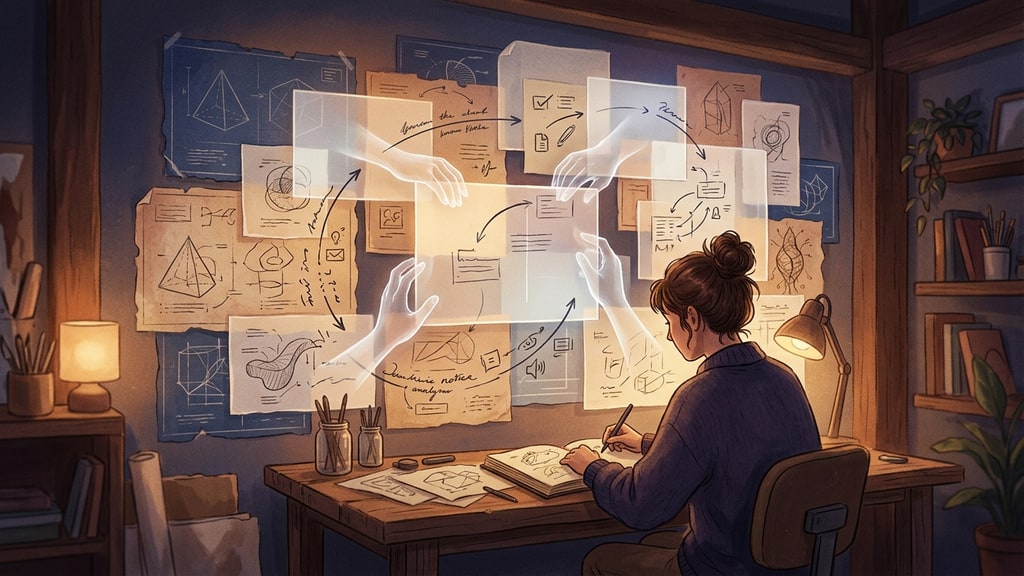
The Japanese word for "relearning" carries a whiff of failure. It sounds like remedial homework: you did this once, you fell behind, now you are catching up. The editorial team behind AICU Magazine Vol.28, one of the largest creative-AI communities in Japan, argues the opposite. In creative AI, relearning is not the punishment for falling behind. It is the baseline fitness that keeps you on the front line at all.
That framing matters, because it changes what you do on a Tuesday afternoon. If relearning is remediation, you procrastinate until something breaks. If relearning is the craft, you schedule it like a session.
Why memorized workflows die young
The editorial's core observation is simple and hard to argue with: models, tools, production environments, and even the legal debate around them all refresh at a brutal pace. A procedure you memorized in March can be obsolete by May. The creator who survives is not the one who memorized the most steps. It is the one who can watch a change, test it, and reassemble their knowledge into a form that works today.
That is a different skill from "knowing the tool." The first skill decays. The second one compounds.
Most image and video workflows fall into the decay trap quietly. You learn one model, one interface, one order of operations. It works, so you stop looking. Six months later the same task takes longer than it should, and you blame the tool instead of your own frozen process.
What a relearning-first issue actually looks like
AICU's Vol.28 issue is a useful case study in building relearning into a routine rather than leaving it to panic. The issue is organized around two ideas that translate directly into how you practice.
The first is structured self-assessment. The magazine runs a mock exam under the International AI Creator Certification framework — 40 questions across eight fields, with answers and explanations on a separate page. The stated purpose is not to sell certificates. It is to make your knowledge gaps visible: the areas you secretly skipped, the assumptions you never rechecked. You cannot relearn a gap you refuse to admit exists.
The second is deliberately tracking the frontier instead of your favorite tool. The same issue covers MiniMax H3 and Seedance 2.0 mini going head to head in video generation, ComfyUI being rebuilt for a video-first era, Cloudflare OS for AI-driven development, and a single API key that ties image, text, and audio together. None of that is news you can act on by reading it once. It is a change log you are supposed to experiment against.
A relearning loop that fits a normal week
You do not need a certification body or a magazine to build the loop. You need three small habits.
Make the gap visible once a month. Pick one task you do regularly — a portrait workflow, a character sheet, a short clip. Run it the way you always do, then run it again with one variable changed: a new model, a new prompt structure, a new reference-image discipline. The second run is your mock exam. It shows you what you assumed instead of knew.
Keep a personal change log. When a model you use ships an update, or a competitor model you dismissed gets a major release, write one line about it: what changed, what you should test, what you are ignoring on purpose. Five minutes a week. This is the habit that turns "there is too much to follow" into "here is the short list."
Reassemble small, not all at once. Nobody re-learns "everything" in a weekend. Port one workflow to the new reality — move one prompt to a new model, restructure one scene for a new aspect ratio, one video workflow to a token-efficient setup. The magazine's own framing is that you win by rebuilding knowledge into currently-valid shapes, and you do that one shape at a time.
The uncomfortable part
A relearning practice has a cost: you will spend time on things you already do fine. The answer to "I already know this" has to become "I knew this last month, let me verify it still holds." Verification beats confidence, and the verification habit is what separates creators who grew with the field from creators who got lucky with one workflow.
None of this requires you to chase every release. It requires you to have a system for deciding which releases are worth your attention, and to treat that system itself as a skill worth maintaining. The moment you stop treating "I've learned this" as a finish line, the tool landscape stops being a threat and starts being a source of edge.
That is the entire argument: in creative AI, you cannot finish learning. Plan for it, and it stops being scary.