DLSS 4.5 Ray Reconstruction Is a Denoising Story, and So Is Your Image Generator
Nvidia shipped a new AI model that cleans up ray-traced lighting on every RTX card back to 2018, with almost no performance cost. Under the hood it is the same discipline generative image tools live or die by: denoising. What shipped, how to enable it, and which lessons actually transfer to image generation workflows.
AI-assisted draft. Reviewed and edited by the Phosphene team before publication.
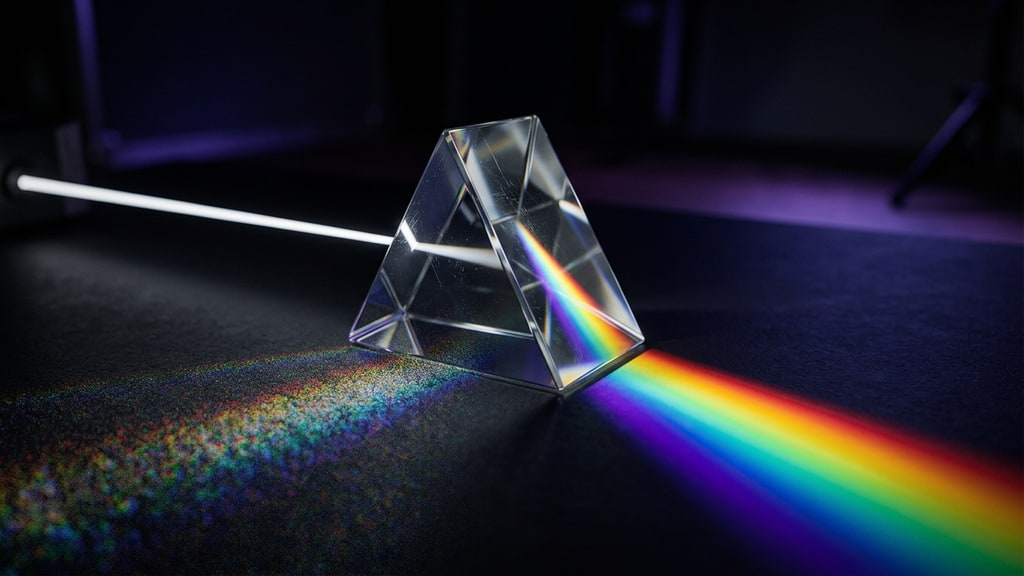
At Gamescom this week Nvidia shipped the piece of DLSS 4.5 that image people should actually read about: a new Ray Reconstruction model that improves ray-traced lighting on every GeForce RTX card ever sold, including the 20-series from 2018. No new hardware, no per-game patch. The Spanish coverage at Xataka framed it as "better image quality without changing your graphics card," which is true but undersells it. A hand-tuned denoiser from an older era got replaced by a bigger neural network, the swap happens at the driver level, and the performance cost is close to zero. If you generate images for a living, that sentence should sound familiar.
What actually shipped
Ray Reconstruction is the DLSS component that cleans up ray-traced lighting. When a game traces rays for reflections or global illumination, it cannot afford enough rays to cover every pixel on screen, so the raw output looks like grain. Older pipelines passed that grain to a hand-tuned denoiser. Since DLSS 3.5 in 2023, Nvidia has used a trained network instead, fusing denoising and upscaling into a single step that can also read engine data like motion vectors.
The version released this week is a second-generation transformer. Nvidia's numbers: 20 percent more parameters, 35 percent more compute capability, similar runtime cost, a larger training dataset, and finer developer control over how the model accumulates information between frames. In plain terms, the denoiser got bigger and smarter and still fits inside the per-frame budget. Early hands-on reporting from DSO Gaming, TechPowerUp, and KitGuru agrees the gains are real and the performance hit is negligible. The visible fixes are exactly the kind of thing denoisers own: snow particles no longer ghosting in Indiana Jones and the Great Circle, laser light responding faster and leaving fewer residual artifacts in PRAGMATA, the fine static lines on a CRT television holding stable in Alan Wake 2.
The supported list at launch covers 30 games through the driver override, including Cyberpunk 2077, Alan Wake 2, Hogwarts Legacy, Half-Life 2 RTX, Indiana Jones and the Great Circle, Star Wars Outlaws, and Call of Duty: Black Ops 7. Developers can also integrate the new model natively through game updates.
One boundary is worth knowing. Ray Reconstruction runs on the whole RTX line because it only needs Tensor Cores. Multi Frame Generation remains exclusive to RTX 50 cards, and standard Frame Generation still requires RTX 40. Nvidia tiered the framerate features and left the image-quality feature open to everyone. That is a deliberate bet on image quality as a software deliverable.
How to enable it
The model is currently in beta and ships through the NVIDIA app's early access channel. An official app update is expected in September, so waiting is a legitimate strategy. If you want it now:
- Update to GeForce Game Ready Driver 580.88 WHQL or newer.
- Open the NVIDIA app, go to Settings > About, and enable Early Access releases.
- Go to Graphics, pick a supported game or Global Settings, then Driver Settings > DLSS Override - Model Presets.
- Select Custom, then under Ray Reconstruction choose "Recommended" or "Preset F" and apply.
The override is the interesting part. Games shipped years ago get a 2026 neural model injected from outside, without touching their code. Keep that mechanism in mind, because it is the same architectural idea as swapping model presets inside a generation tool.
Why this matters outside gaming
Denoising is not a gaming side topic. A diffusion image generator is, mechanically, a denoiser run over and over. Each sampling step predicts noise and removes a slice of it; the quality of that prediction is the quality of the model. When you choose a sampler or a step count, you are deciding how the denoising is run, which is an inference control, not a substitute for the capacity of the network doing the predicting. That is the loose parallel to the dial Nvidia just turned up: they swapped in a bigger trained denoiser, while you mostly choose how many times yours runs. Even a denoise strength of 0.35 versus 0.45 in a HiRes fix pass only sets how far the second pass may move from the upscaled input; the model's own capacity stays fixed.
A few lessons transfer directly.
Temporal stability is a modeling problem, not a lottery. Games solved frame-to-frame flicker by feeding the network motion vectors and letting it reason across time. The equivalent in generated images and video is feeding the model more signal: reference images and identity conditioning. A fixed seed helps too, not as extra conditioning but as a repeatability aid, pinning the starting noise so changes you make elsewhere show up cleanly against a comparable baseline. When output wobbles across a series, the fix is usually more grounding, not more rerolls.
Decoupled inference lets old hardware run new models. A Turing card from 2018 runs a transformer trained this year because inference is separated from the silicon generation. The same logic is why Nvidia's PiD decoder could merge upscaling into a single diffusion pass and why a web tool can add a new image model without users rebuilding anything. The interface stays stable while the model underneath improves. Betting on that pattern, rather than on any single model, is the correct long game for creative pipelines.
There is also a boundary worth respecting: reconstruction is not generation. Ray Reconstruction has ground truth available, the same scenes rendered offline with enormous ray counts, so the network learns to approximate a measured signal. That is why Nvidia can ship it as a blind driver override without worrying it will redraw someone's game. An unconditioned text-to-image model has no ground-truth target to approximate, only priors, so swapping it changes what an image means, not just how clean it looks. Conditioned paths like image-to-image and ControlNet do consume a measured input image, but even there the model re-imagines toward the prompt rather than recovering a rendered original. "Just use the better model" is safe advice for denoising and genuinely risky advice for generation. One refines what was measured; the other re-imagines it.
The quiet headline
The story underneath this launch is that image quality has become a software deliverable. The card you own is increasingly just an inference engine, and what it produces is decided by networks shipped years after the silicon. That is the same design logic behind multi-provider generation setups like Phosphene: your workflow, tags, and references stay put, and the model is a swappable preset underneath them. When a better denoiser, decoder, or full generator ships, you adopt it without starting over.
If you have an RTX card and a ray-traced library, flip the override and see what a modern denoiser does with games you already own. If you build image workflows, steal the architecture: stable surface on top, replaceable models below.