The DALL·E 2 Nostalgia: Why Imperfect AI Images Are the Ones We Miss
A viral side-by-side of the same cookie still life generated with DALL·E 2 and with today's models made most people pick the old one. The reaction says something real about over-optimized image models — and about keeping character in your own work.
AI-assisted draft. Reviewed and edited by the Phosphene team before publication.
On this page
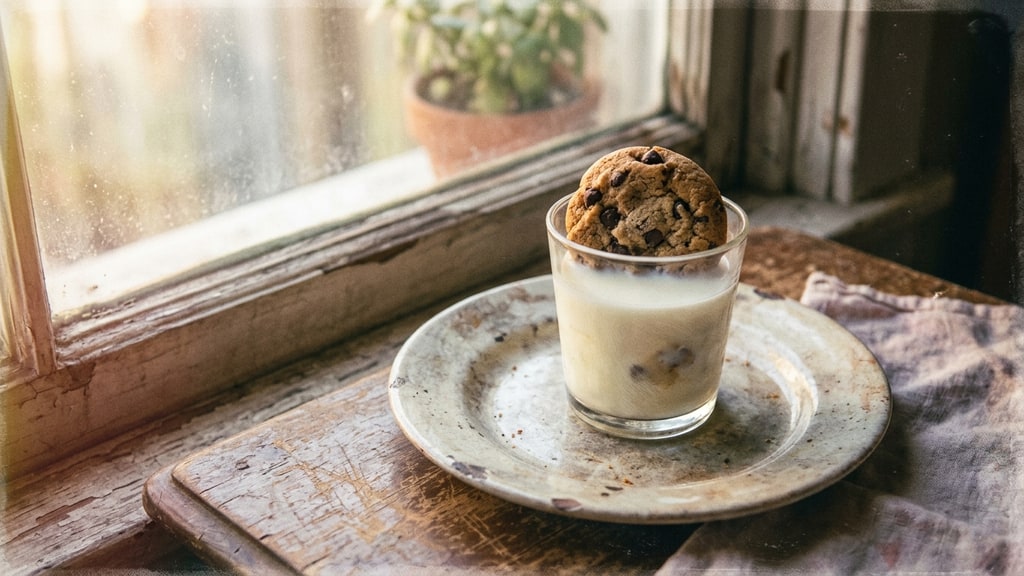
For the past few weeks, a comparison has been circling on X. The same still life — a cookie soaking in a glass of milk — generated first with DALL·E 2 and then with newer models, using the same prompt. The dominant reaction was not "what a leap forward". It was "I prefer the old one".
Spanish tech outlet Xataka noticed the pattern and wrote it up: DALL·E 2 launched in April 2022, OpenAI removed it from its API on May 12, 2026, replaced by the models behind ChatGPT Images 2.0, and the standalone DALL-E GPT inside ChatGPT follows on August 30, 2026. Four years was enough for a model that felt like magic to become an object of nostalgia.
This is not a historical footnote. It is a practical signal about how image models are optimized, what that optimization costs, and how creators can keep character in work that increasingly wants to be flawless.
The debate is about grain, not accuracy
The words that keep coming back in these threads are consistent: grain, brushstrokes, Holga texture, "actually looks painted". One user who started with DALL·E 2 in 2022 says it was the model that made her understand latent space, and that DALL·E 3's shift toward what she calls Midjourney's "colorist void" is what pushed her away.
Think about what is being missed here. Noise was the defect that engineers spent years polishing away. Grain, soft focus, imperfect edges — these were bugs on the roadmap to photorealism. And now they are the exact features people grieve, because they are the trace of improvisation rather than assembly.
The phrase Xataka's coverage picks out is worth sitting with: a model that ignored half the instructions sometimes produced more character than one that follows all of them.
Over-optimization is a feature of the reward loop
People who work on these models have a name for what happened: over-optimization through human feedback. The scoring systems reward symmetric compositions, saturated colors, and extreme detail, because those score best in quick blind tests. But liking something in a five-second test is not the same as wanting to look at it on a wall.
The output signature is recognizable at a glance. Clean edges, inflated contrast, a tidiness that betrays the artificial hand — and that tidiness is exactly what makes people raise an eyebrow now.
This is the same failure mode we already watched in text models: optimize hard enough for a metric and you optimize away things the metric never measured. For image generation, what got optimized away was surprise. DALL·E 2 interpreted, guessed wrong, and occasionally astonished. Modern models behave more like a form: the more detailed the prompt, the more literal the answer, the less room for accident.
The same cycle already happened twice
Image generation is not the first medium to polish itself past the point of taste.
Digital photography resolved more detail than film, and the over-sharpness sent photographers back to analog grain. Digital audio cleaned up tape hiss, and producers started re-adding tape noise so records would sound "alive". Same impulse, twice, in a decade each. Generative AI is running the same loop at a much faster cadence.
The general lesson is that technical improvement and aesthetic value are not the same curve. Every generation of tools decides what to keep and what to polish away, and the audience keeps voting with their eyes for the version with a visible hand in it.
The honest counterpoint
A full nostalgia story would leave something out, so let's name it: DALL·E 2 also produced mangled hands and broken compositions, and at the time those were flagged as failures, not celebrated as style. Part of what now reads as artistic intention was simply an unresolved technical limit. Nostalgia selects convenient memories.
But that correction does not cancel the signal. The point is not that the old model was better. It is that the industry's new quality standard does not cover the whole space of taste. Perfect prompt adherence and photographic correctness are real achievements. They are just not the only axis on which an image can be good — and for mood, atmosphere, and a sense of a hand at work, they can actively hurt.
What creators can actually use
None of this requires giving up on modern models. It requires treating imperfection as a deliberate choice in your pipeline.
Route the job, not just the model. The most expensive, most literal model is not the right tool for every step. Ideas, atmospheres, and "dirty" visual directions benefit from a freer model with visible texture; final execution benefits from a precise one. The same argument we made for keeping a legacy model as an ideation engine applies here: character often comes from allowing the first pass to be strange, then cleaning it up on purpose.
Add an intentional defect at the end. If your output is too clean, you can choose a grain pass, a color shift, a Holga-style vignette — not as masking, but as authored texture. The market already sees this: Xataka notes design studios now sell filters that simulate the DALL·E 2 look on images from newer models, the same impulse that turned Instagram filters that aged perfectly decent digital photos into an empire in 2011-2014.
Question the quality score. Benchmarks and blind tests measure "pleasing in five seconds", not "interesting for a long time". Set your own criteria before you trust a model ranking: does this keep surprising me, does it hold a character across a series, would I believe a human made it.
Treat a look like a generation, not a bug. If you are building a body of work, committing to a specific imperfect aesthetic — one model, one grain, one palette — is a style decision, not a compromise. It is the same logic as an era of film stock, and it gives a series a coherence that chasing the latest checkpoint never will.
The takeaway
When a technology hits its technical ceiling, the next battle is not higher resolution. It is deciding which imperfection to keep.
For creators, that is freeing. The tools keep getting better at obeying you, and that is useful. But the character in your images will increasingly come from the constraints you choose not to remove — the grain you keep, the surprise you leave room for, the accident you decide to call a feature.