Prompt Engineering Guide for Better AI Images
A practical guide to writing clear, controllable prompts that improve image quality and reduce wasted generations.
On this page
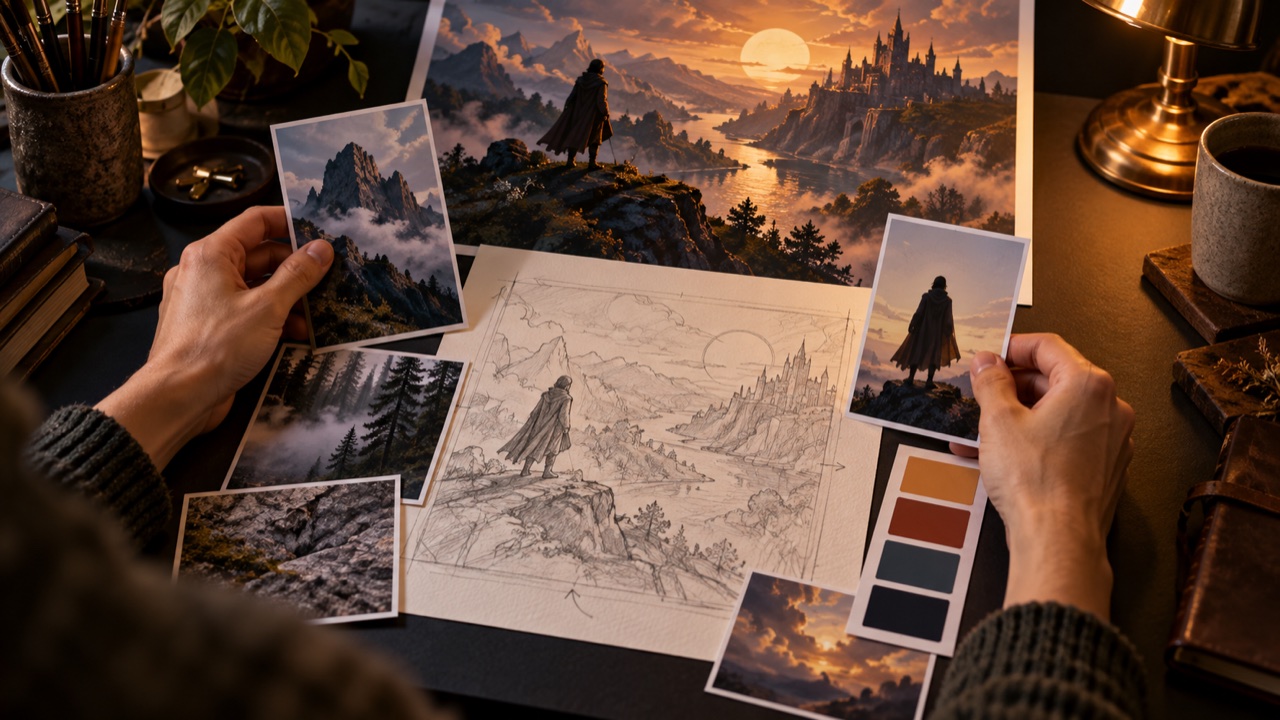
Good prompts are not long prompts. They are structured prompts.
Prompt structure that scales
A reliable template:
- Subject: who or what is the focus
- Context: where it exists
- Style: visual language and medium
- Camera: framing and lens intent
- Lighting: mood and key light behavior
- Constraints: things to avoid
When prompts fail, one of these blocks is usually ambiguous.
Use specific nouns, not stacked adjectives
Weak: "beautiful, stunning, amazing fantasy scene"
Stronger: "ancient basalt temple carved into sea cliffs, storm clouds, bioluminescent mist"
Concrete nouns reduce model guesswork.
Control negatives deliberately
Negative constraints are most useful when they are narrow:
- avoid extra limbs
- avoid text overlays
- avoid watermark artifacts
Avoid long negative lists unless there is a repeated failure pattern.
Iterate with a changelog mindset
Track each generation attempt with one intentional delta:
- v1 baseline
- v2 changed lens from 35mm to 85mm
- v3 changed lighting from hard noon sun to overcast diffuse
This makes quality improvements reproducible.
Build prompts with tags in Phosphene
Phosphene helps by turning prompt design into composable parts:
- define core subject tags
- layer stylistic tags
- add relation tags to resolve scene logic
The result is faster convergence and fewer "start over" moments.
Final quality check
Before exporting, verify:
- composition reads at thumbnail size
- focal subject is obvious in under one second
- style is consistent across foreground and background
- no artifact immediately breaks immersion
If one fails, revise the specific block instead of rewriting the full prompt.