A Seven-Minute AI Film Chapter Is a Production Decision
Musk promised a full Odyssey film by the end of 2026. What arrived is seven minutes and a chapter label. The interesting part is not the photorealism, it is the number of shots one team had to keep consistent.
AI-assisted draft. Reviewed and edited by the Phosphene team before publication.
On this page
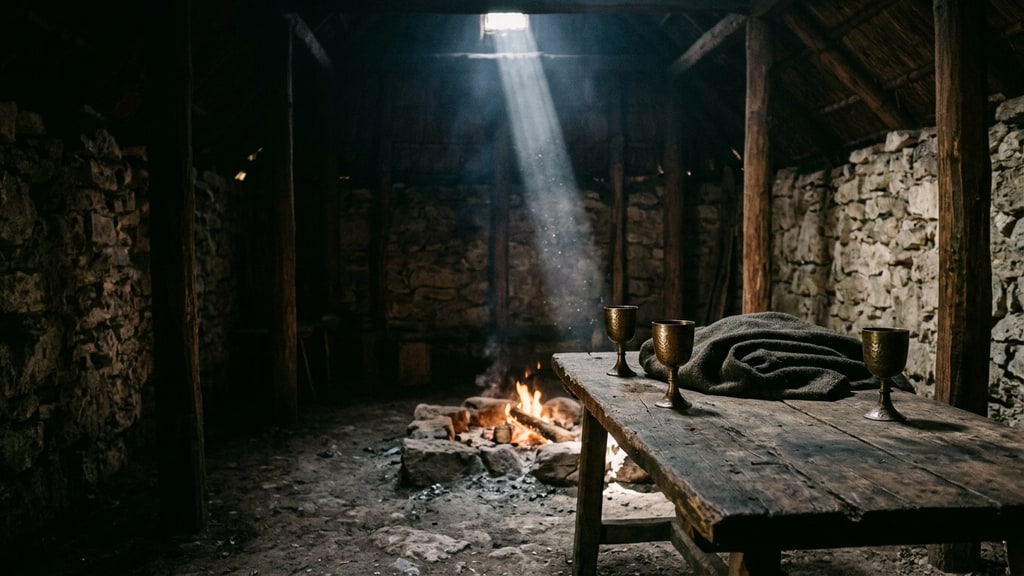
In July, Elon Musk promised that Grok Imagine would deliver a feature film of the Odyssey before the end of 2026, and added the part that made it a fight: it would be historically accurate and faithful to Homer. He made the promise while attacking Christopher Nolan's adaptation, which he said had "profaned" the poem.
Three months later the first footage exists. It runs a little over seven minutes, it is labelled as the first chapter, and it was produced by Wonder Studios with Dev Walker directing inside Grok Imagine.
Most of the reaction has gone to whether the frames look real. They often do, and the atmosphere holds up better than the average generated demo. But realism is the least informative thing about those seven minutes. The format is the story.
Seven minutes is a scope decision, not a trailer
A feature is roughly two hours. Seven minutes is about a sixteenth of that, and it covers the prologue: the setup before the voyage turns into the voyage. That is a deliberate cut of the text, not a shortened film.
It also matches how the poem already behaves. The Odyssey arrives divided into 24 books, and each one can stand on its own. Chaptering is not an admission of defeat for a generation pipeline. It is the structure the source material hands you.
The part worth paying attention to is the arithmetic underneath. Seven minutes at an average cut length of eight seconds is around fifty shots. Fifty shots means fifty decisions about how a character's face is built, what the light is doing, which side of the room the door is on, and what the hero is holding. A model that renders a beautiful frame has solved one of those decisions. The other forty-nine are bookkeeping, and bookkeeping is where generated sequences fall apart.
Sixteen times more runtime is not sixteen times more compute in any useful sense. It is sixteen times more places for the story to drift.
What actually holds or breaks over fifty shots
The Spanish coverage of the release split the reactions down a familiar line. Some viewers praised the photorealism; others argued the result does not work as cinema. Both observations can be true at once, because they are grading different things.
Here is the checklist I would use on any long generated cut, and it is short on purpose.
Identity across a cut is where most generated sequences die. If the lead turns from the fire and the next angle gives him a slightly different nose, no amount of grain saves it. This is the problem our character consistency notes keep circling, and it gets worse with every additional setup.
Object state is the item nobody budgets for. A cup is full, then half, then gone, then back on the table in the reverse angle. Generated sequences lose track of props because each shot is generated without a memory of the last one. Human editors hide this with cutaways. A pipeline hides it by writing the prop state into the shot brief.
Light direction has to stay put. One sun, one window, one fire. A close-up lit from the left followed by a wide lit from the right reads as a mistake even when every frame is individually convincing.
The first close-up with dialogue is the hardest thing in the seven minutes. The source piece names it directly: whether a generated performance convinces in the moments that require expression. Wide shots and vistas are forgiving. A face holding a sentence is not.
Pacing is named in the coverage too, and it is the item I trust least in a short excerpt. Rhythm belongs to the whole, and a prologue is exactly where a film can afford to be slow.
Almost every public argument about this release collapses into one of those five. That is useful, because it means the argument is testable rather than a matter of taste.
The historical accuracy promise is not a technical claim
Musk's stated goal was a version faithful to Homer and accurate to the period. No single uncontested standard can grade that, because the standard is interpretive. Historians disagree about the Bronze Age details, and every adaptation makes choices the text does not settle. A production can still be graded against the evidence set and the interpretive choices it declares up front, which is a different and much narrower exercise. Nolan's film is being argued about for exactly that reason.
What a model can be graded on is whether the production made consistent choices and stuck to them. A single helmet design used across twelve shots is a real achievement. A beautiful helmet that changes shape between angles is a costume department that does not exist.
That distinction matters for anyone selling work, not just for a billionaire's grudge. "Historically accurate" is a claim a client can attack from any direction. "Consistent with the reference set we approved" is a claim you can defend with a sheet of stills.
What this changes for people making shorter work
If a seven-minute chapter needs fifty shots, a sixty-second product film needs eight, and it inherits the same bookkeeping at a smaller scale. The lessons transfer down, not up.
Build the shot list before generating anything. One line per shot: framing, who is in it, what they hold, where the light comes from, and what has to be true at the end of the shot. Most drift starts as an unstated assumption.
Lock the look on stills first. Approve the face, the wardrobe, and the palette as images, then carry those references into motion. Our image-first production walkthrough covers the sequence in more detail, and the short version is that a reference frame is cheaper to fix than a rendered shot.
Regenerate surgically. When one shot breaks, replace that shot and keep the neighbours. Rebuilding the whole sequence because shot thirty drifted throws away every decision that was already correct, including the ones you have not noticed yet.
And grade the cut, not the frame. A model that produces one stunning image and one broken transition is worse for a film than a model that produces fifty competent frames. Public demos optimize for the first number. Production lives on the second.
What the seven minutes prove
They prove that a team can hold a look, a cast, and a location together long enough to assemble a coherent opening. That is a genuine milestone and it is a narrower one than "AI can make a feature film", which is what the headline promises.
The remaining distance is not mainly visual fidelity. It is the cost of keeping fifty shots in agreement, and then multiplying that by the seventeen chapters a two-hour version would need. Anyone who has stitched a thirty-second sequence knows the curve is not gentle.
So watch the cut points. Skip the vistas on the first pass and look at the moment the camera changes angle. That is where the state of the art actually lives, and it is a much better predictor of what you can ship than the best frame in the trailer.