What the 95-Minute AI Feature Film Hell Grind Teaches About Long-Form AI Video
Higgsfield shipped a 95-minute AI feature for under $500k, generating more than 16,000 clips to land 253 usable cuts. Inside the economics, the physics-first prompt style, and the lessons indie creators can actually reuse.
AI-assisted draft. Reviewed and edited by the Phosphene team before publication.
On this page
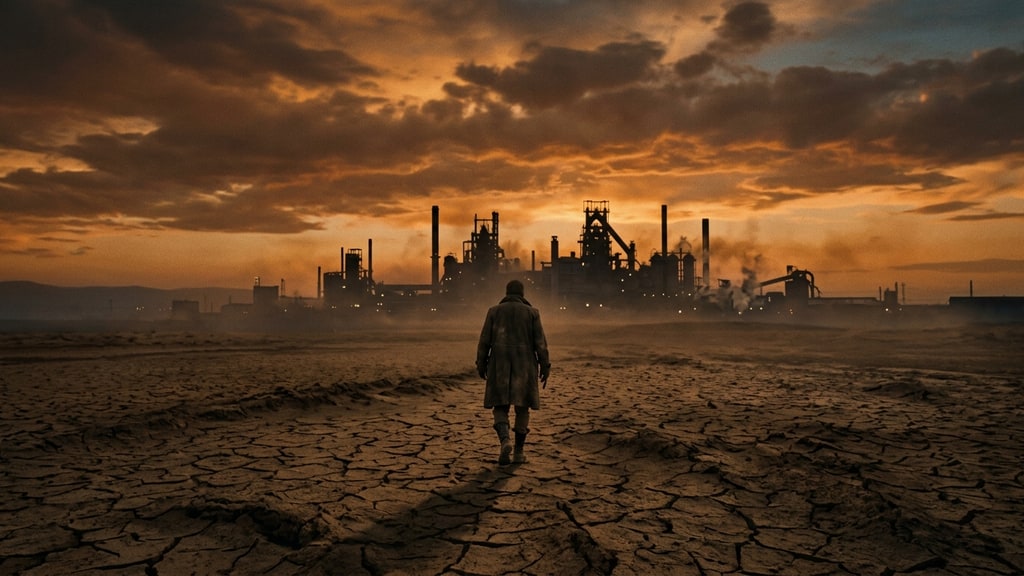
Higgsfield's Hell Grind, billed as the first full-length AI feature film, is a 95-minute action movie built entirely on Seedance 2.0. It is on YouTube, it has a crew, and it was finished in 14 days.
The number that matters is not 95 minutes. It is 16,181. That is how many video generations were needed to land 253 final cuts for the first 25 minutes of the film, according to the studio. Every usable shot cost about 64 attempts, and the average shot runs under six seconds.
Long-form AI video is not a prompting problem. It is a production-management problem.
The economics: half a million, mostly compute
Founder Alex Mashrabov said on LinkedIn that a team of 15 professional directors, cinematographers, and editors produced the film on Higgsfield's platform in 14 days for under $500,000. WSJ reporting on the project put the compute bill at $400,000, kept in check by running on Nebius and CoreWeave rather than the big hyperscalers. Everything else, about $100,000, had to cover labor, sound, editing, and promotion.
Read that split again. Four out of five dollars went to running the model. The non-compute costs totaled about $100,000 and covered labor, sound, editing, and promotion. That was roughly one fifth of the total reported budget — and only a quarter of the $400,000 compute bill. That is the unit economics of AI film right now, and it explains a lot about who can attempt a feature and who cannot.
The workflow is a slot machine
Higgsfield's content lead Adil Alimzhanov described the core of production as generating 15-second clips until they clear the bar. Mashrabov called it a slot machine feeling. The full tutorial for the film shows the scale: 48,336 total generations, roughly 800 assets produced, and 8 used in the final cut.
The lesson here is uncomfortable. No prompt engineering, no agent automation, and no system will remove the last mile. Whatever the model can do, someone still has to look at every output and decide if it is good enough. That human pass is not a bottleneck to be optimized away. It is the production.
Why the prompts read like a technical spec
Higgsfield published the film's assets and prompts. The prompts are enormous, around 3,000 characters on average, with some cuts exceeding 10,000. Their content is more interesting than their length.
They describe physics facts, not adjectives. Gravity, inertia, mass, grounded shadows, props that do not float. Camera intent in meters and degrees: lens height, tilt, distance from the subject. The Japanese analysis that covered the film describes it as a storyboard converted to text, dense enough to replace a shot list.
The distinction matters. "Cinematic" and "realistic" are vibes, and vibes are what the model fills in conservatively when you do not specify more. A fact like "the car settles forward and rebounds between 2.0 and 2.6 seconds" does not guarantee the shot — no prompt detail can — but it narrows the plausible output range. The model still guesses, but you have drawn the rails.
This is also where the workflow stops being manual. Higgsfield sells a tool that takes about a page of script and expands it into thousands of characters of production prompt. The pipeline becomes three layers: a human writes the script, an AI expands it into a long prompt, and a human curates the outputs. The middle layer is the part that scales.
Why the prompts had to get long in the first place
The same Japanese analysis that covered Hell Grind had just wrapped a long comparison of Seedance 2.5 against MiniMax H3 and Seedance 2.0 for live-action drama. The conclusion was decisive: for that scope, 2.5 wins, and the older models are no longer worth the testing time.
The reason long prompts exist is baked into how 2.5 behaves. Higher fidelity means missing information gets filled in automatically, and the model's default fill is safe, realistic, and static. It keeps characters stable and scenes believable, but it also makes the output boring and predictable unless you override it with specifics. Runway raised its prompt input to 15,000 characters the day 2.5 launched, up from 3,500, which tells you the direction the platform itself expects.
The practical takeaway for anyone working with these models: if you want a specific performance, you must write it. The model will not improvise creatively. It will improvise safely.
Voice is the weak point
The film's most public weakness was audio. Variety reported that all music except one track was AI-generated, and Mashrabov admitted the production was missing professional voice actors.
That confession matters. As visuals improve, rough voice work gets more visible, not less. The audience forgives a slightly soft render long before it forgives flat line readings. Voice acting and sound design are currently the highest-ROI place to spend human money on an AI film.
What to copy, what to skip
Copy the prompt discipline. Write physics facts, camera numbers, and concrete blocking. Save the adjectives for the actors.
Copy the three-layer pipeline. Write the script yourself, expand it into production prompts with an AI, and spend your energy on curation.
Copy the shot budget. Decide in advance how many generations a shot is worth. Hell Grind could afford 64 per cut; most projects cannot. A hard cap per shot changes how you write prompts, because you stop betting on the model and start narrowing the search space.
Skip the brute force. 48,000 generations only works on a studio budget with a studio crew to review them. For indie work, the winning move is the opposite: fewer, better-scoped shots, reuse of successful shots, and a fixed reference pack so identity does not have to be re-earned every generation.
Skip the "make it not look AI" perfectionism. A 95-minute film got made by accepting imperfection and shipping. That is a bigger deal than any single shot.
The source analysis ends on a note worth repeating: for independent filmmakers this is the golden era, the kind of opportunity that does not come twice. The tools are imperfect, the pipeline is brute force, and the economics still favor studios. But a feature film was made in 14 days by fifteen people. That number was not possible last year.