Critique Is a Craft: An AI Art Award Started Scoring the Comments
Japan's International AI Creator Award 2026 added a prize for the people writing criticism, not just the people making pictures. The mechanics are worth stealing: 280 characters per work, a rewrite replaces the old comment, and the scoring formula is deliberately unpublished.
AI-assisted draft. Reviewed and edited by the Phosphene team before publication.
On this page
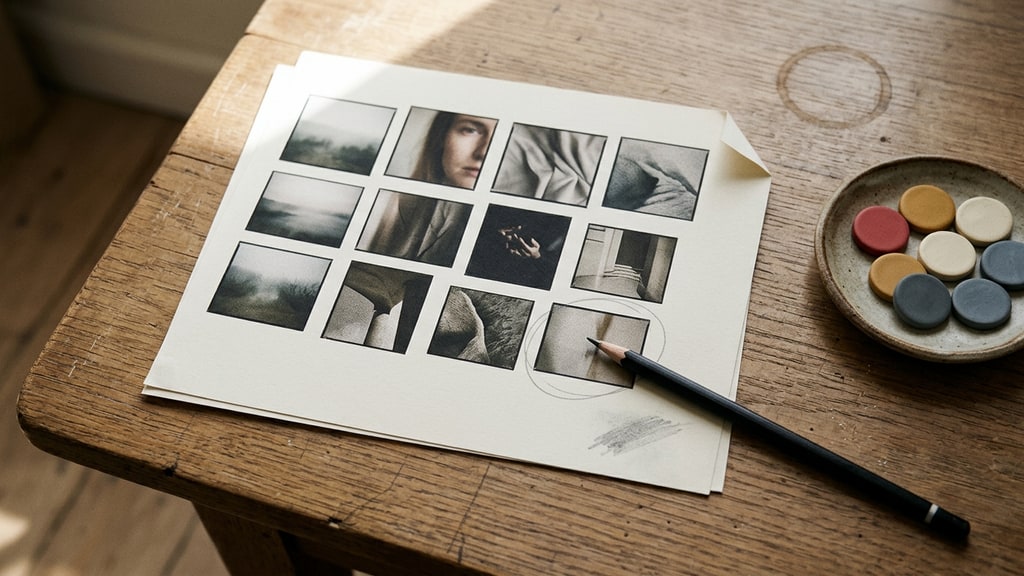
Every image tool has one button you press more than any other. Not generate. Again.
You look at the result, decide it is wrong, and change something. That decision is the whole job. Prompting gets easier every quarter, and knowing what is wrong with a picture does not get easier at all. It is the part of the craft with no documentation, no leaderboard, and no obvious place to practise.
So a detail from the International AI Creator Award 2026 caught my attention. The award, run by the Japanese AI creators group AICU, has 321 works from ten categories sitting in a public gallery with a normal popular vote. Alongside that vote it created a second prize for the people writing the comments. Not for the artworks. For the criticism.
The prize nobody else runs
It is called the Cheerful Community Commentator Prize, or CCCP, which the organisers translate as the best cheering award. The rules around it are more specific than the framing suggests:
- A comment on a work is capped at 280 characters.
- You get one comment per work. If you rewrite it, the new version replaces the old one rather than stacking underneath.
- You can write in any language. An automatic translation is attached and your original text stays visible.
- Reactions use a set of 100 emoji characters, of which you can arrange 16 into your own palette. The categories cover things like agreement, surprise, delight, and doubt.
- Emoji can be attached to comments, not only to artworks, so a reply to someone's reading of a piece is itself reactionable.
- Sharing counts too. Pressing share while signed in earns a small credit and gives you an invite link, and a personal code in a work's URL credits you when someone arrives through it and signs up.
- The leaderboard for commenters aggregates hourly, and it scores the comments you wrote, the reactions those comments collected, and your share activity.
- The scoring formula, the weights, and the point values are not published. The organisers say they adjust the calculation as participation changes, and they reserve the right to correct or exclude activity that looks like inflation.
There is also the plain anti-gaming layer: cooldowns on rapid posting, and a code of conduct that bans buying votes, automation, coercion and multiple accounts. A separate ranking shows which works collected the most comments.
The prize itself is modest. Winners get an invitation to the networking event after the November 20 ceremony at Makuhari Messe, plus a trophy handed over on site only. It is a side event, and the organisers are explicit that CCCP points are never added to an entry's vote total or to the final judging score.
Why scoring the comment is the interesting move
Award organisers usually treat the audience as a vote count and the gallery as a shop window. AICU's chair, Akihiko Shirai, framed the intent differently in the announcement: the goal is creative culture in the AI era that goes past the influencer and Web3 eras, where makers do their own discovery, critique and distribution rather than waiting for a platform to rank them.
That is a small sentence with a large claim inside it. If discovery and critique are part of the craft, then a gallery that only counts votes is measuring one thin slice of what the room is doing. It also explains the format choice. Commenting is the cheapest form of critique that leaves a public trace, and a trace can be scored.
I think the diagnosis is right and the instrument is imperfect.
The 280-character limit does the teaching
The rule I keep coming back to is not the length. It is that rewriting replaces.
On most platforms a thread lets you pile on. You react, someone replies, you clarify, and the original bad take stays in the record. Replaceable comments behave differently. If you revise, you lose the first version, so the second version has to be better on its own. You end up doing the thing that separates good editors from bad ones: reading your own reaction and asking whether it was about the work or about you.
That is the same muscle you need in the generation loop. The first reaction to an output is usually a mood. "Something is off." A usable note is specific: the shoulder sits higher than the other, the light comes from two directions, the jacket texture fights the face for attention. The mood is free. The specific note takes a minute of looking.
Ten of those a week for a month will change how you read your own renders, because you stop accepting "off" as an answer.
What a 280-character critique can actually contain
Three moves fit comfortably:
- Name what you saw, in concrete nouns. Not "great atmosphere" but "the fog only exists behind the character."
- Name what it did to you, honestly. Bored in the second half. Wanted to keep looking at the hands. Could not find the subject for four seconds.
- Name one change you would try. One. Not a rewrite of the artist's intent.
A weak version reads like a compliment with a hedge: "Beautiful work, the colours are amazing, maybe the background could be a bit different?" It costs nothing to write and gives the maker nothing to act on.
A version that survives the format: "The fog appears only behind her, so the foreground reads as a cutout. When I look at the frame my eye goes to the sharpest edge, which is her sleeve, not her face. Try putting a little atmospheric haze in front of the left arm and see if the eye moves." That is 252 characters, it is about one decision, and the maker can test it in a single regenerate.
The cost is time. Writing three of those takes longer than clicking hearts on thirty images, and the maker can act on all three.
Where the design is weaker than it looks
An unpublished formula for social behaviour has an obvious downside: participants cannot know what they are being scored on, so they guess, and the guesses that spread are the wrong ones. The live board updates hourly, which invites checking it, which turns a practice into a competition with a hidden scoreboard. Add a volume dimension and you get a predictable outcome. The most active commenter wins, and the most active commenter is not always the most useful one.
There is a second problem the format creates for itself. A scored comment becomes a performance. People write for the plausible reader who might send an emoji back, and the private note that would actually help the artist, the one that says "I stopped watching at 0:40", is the least rewardable thing you can post.
Translation is the third soft spot. Anyone can write in their own language and the original is preserved, which is the right call, but machine translation flattens register. Sarcasm becomes neutral. A precise technical term becomes a vague adjective. The people best placed to judge a Japanese creator's compositing choices can read the Japanese, and everyone else is reading a paraphrase. That is a limit on how much cross-language critique the system can really carry.
None of these are reasons to skip the exercise. They are reasons to treat a leaderboard as a leaderboard. The organisers themselves say a mid-event position on the board is not a result, and they close the counting window without announcing the exact minute, to stop last-hour gaming.
What to take from it if you never enter
Three habits, none of which need an award.
Build your own emoji palette. A fixed set of sixteen reactions is a vocabulary, and a vocabulary forces you to distinguish "I do not understand this" from "I do not like this". Most of the confusion in image feedback comes from collapsing those two.
Finish the thing before commenting. One comment per work is a good rule precisely because it punishes skimming. Scrolling a gallery and reacting to thumbnails trains you to judge thumbnails, and thumbnails are not what you are making.
Keep your note in your own language even when the maker does not speak it. Your first draft in a second language loses the observation. Translate after, not during.
The public voting in this award closes in mid-November, and the commenter standings close during a watch party around the same time. The dates will be irrelevant by December. The habit is not, because it is the only part of the loop where the tool cannot do the work for you. If you want a reminder of how much of the score lives outside technical execution, the published rubric from a 32-hour AI film hackathon in Asia is a harsher version of the same lesson: technical polish was worth five points out of a hundred.