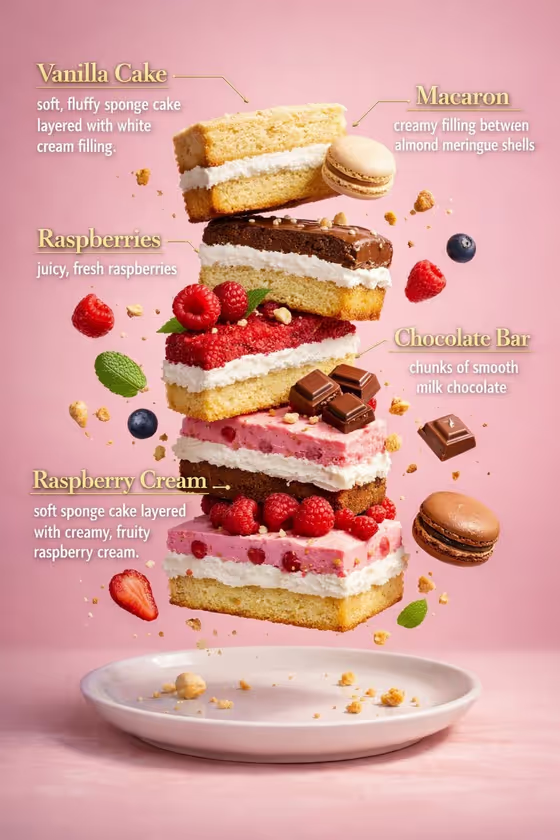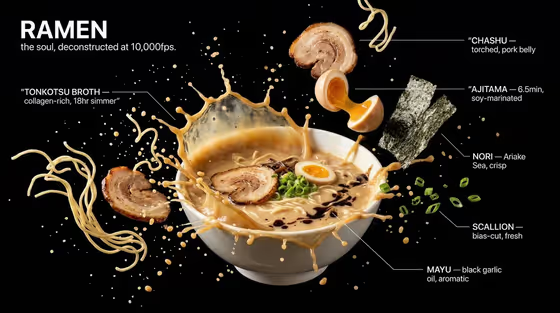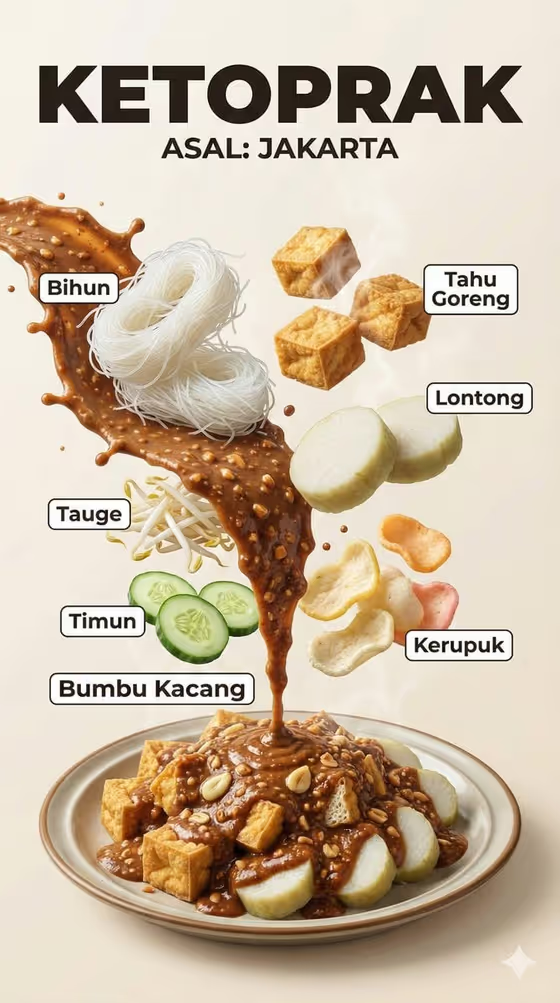
This template builds a vertical food guide in the style of a magazine spread. A finished Indonesian dish sits at the bottom of the frame, and its key ingredients hang in the air above it, each one tied back to the plate with a thin pointer line and a short label. A bold headline with the dish name and its place of origin sits across the top.
It suits food bloggers, restaurant owners, recipe creators and anyone who wants to explain what goes into a dish at a glance. The cover example shows ketoprak from Jakarta, with ingredients like noodles, fried tofu, rice cake, bean sprouts, cucumber and crackers suspended above a plate drenched in peanut sauce.
What works best as input
- For Food product or Indonesian dish, type a specific dish name such as beef rendang, chicken satay or gado-gado. If you have a reference photo of the dish, this field accepts one, so pick a clear, well-lit shot of the finished plate.
- If you upload a photo, choose one where the whole dish is visible and the sauce, garnish and main components can be told apart. Heavy shadows or a cropped plate give the template less to work from.
- For Dish title and origin, follow the placeholder pattern: dish name, a separator, then the region, for example RENDANG · WEST SUMATRA. Short, capitalized text fits the headline style best.
- For Ingredient story, pick the option that matches what you want to show, such as five labeled core ingredients or protein, aromatics and sauce. Choose it to fit the dish, since some dishes read better as components and others as sauce and garnish layers.
How to use it
- Open the Floating Indonesian Food Guide template in Phosphene.
- Fill in Food product or Indonesian dish with a dish name, or add a reference photo of the dish if you have one.
- Choose an Ingredient story option and type your Dish title and origin line, for example SATAY · JAVA.
- Generate the image, then check that the headline reads correctly, the labels match the floating ingredients and the plate at the bottom looks like the dish you meant.
Tips for a better result
- Use a dish whose ingredients look distinct from one another. Noodles, tofu, herbs and sprouts separate clearly in mid-air, while a dish that is mostly one uniform stew gives the labels less to point at.
- Keep the title line short. A one or two word dish name plus a single region reads cleanly in the large headline type.
- Try the same dish with a different Ingredient story to get a different composition, for example core ingredients in one run and spice paste and garnish layers in another.
- If the first result misses on a detail, adjust the dish description to be more specific, such as naming the sauce or the main protein, and generate again.
Common mistakes
- Typing a vague dish name like food or Indonesian meal. The template needs a recognizable dish to build both the plate and the floating ingredients.
- Writing a long sentence in Dish title and origin. It is meant for a short headline and origin, not a description.
- Uploading a blurry, dark or heavily cropped reference photo and expecting the plate and ingredients to come out accurate.
FAQ
Do I have to upload a photo?
No. The dish field is a text field, so you can simply type the dish name. It also accepts a reference photo if you want the result to follow a specific plate.
What format does the result come in?
It produces a single image in a 3:4 vertical layout, styled like a magazine spread.
Can I use a dish that is not on the example list?
Yes. The examples are suggestions, and the field also accepts your own chosen dish. Type the dish name and a matching title and origin line.
What should I write in the Dish title and origin field?
Use the dish name and its region, separated by a dot, like GADO-GADO · JAKARTA. Keep it short so it fits the headline at the top.