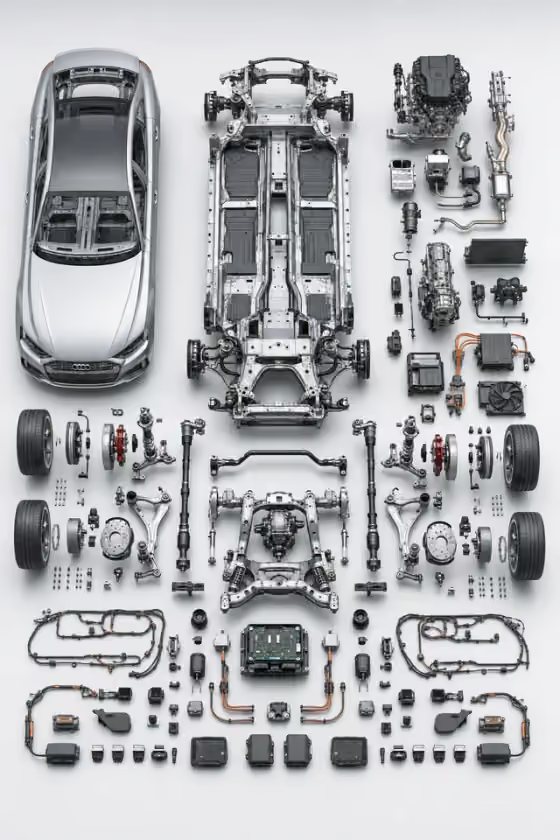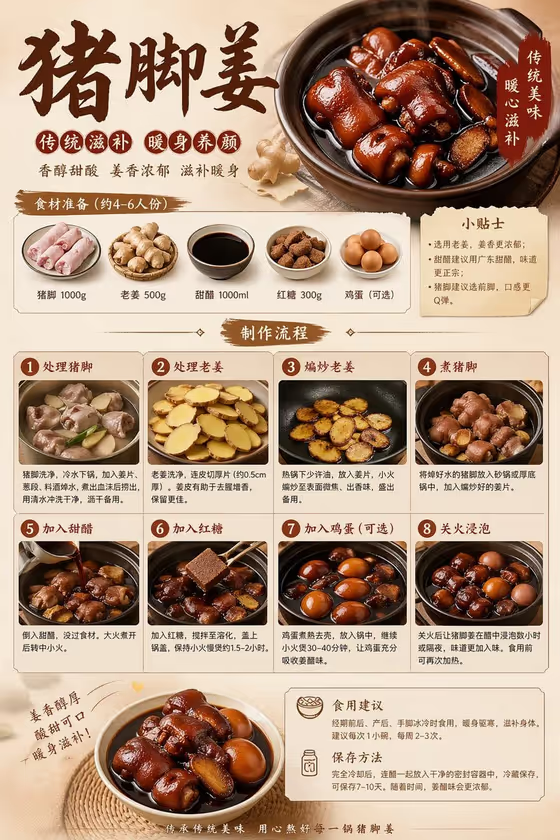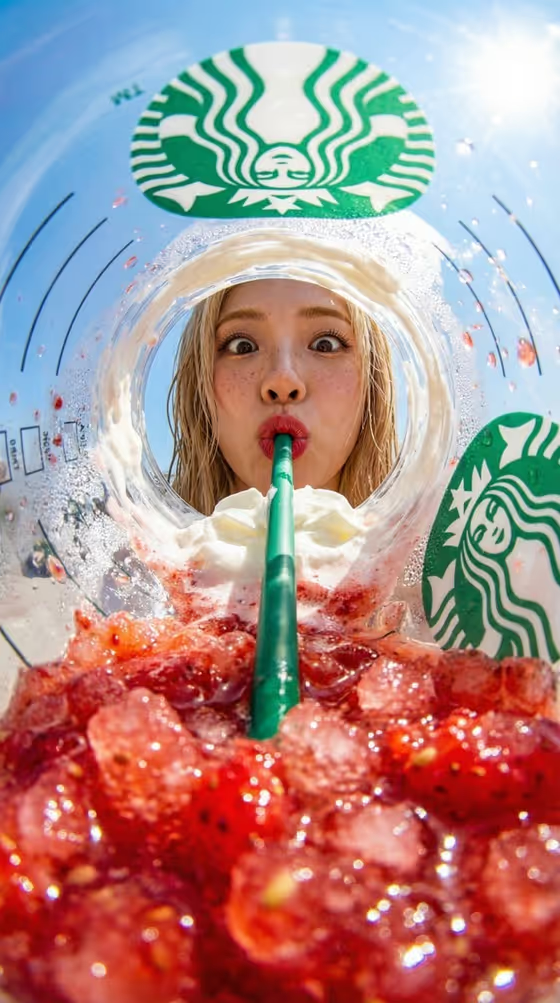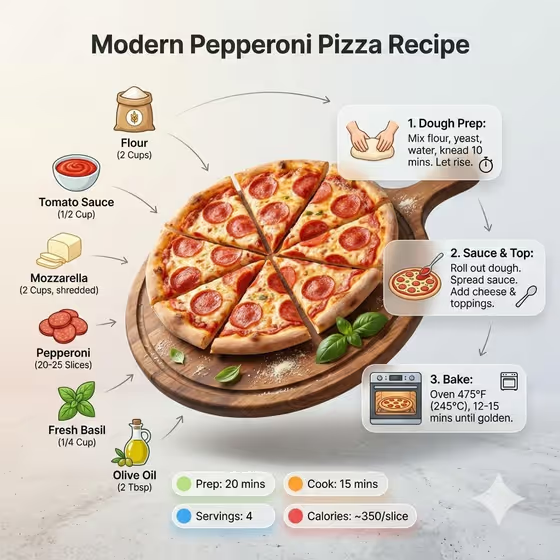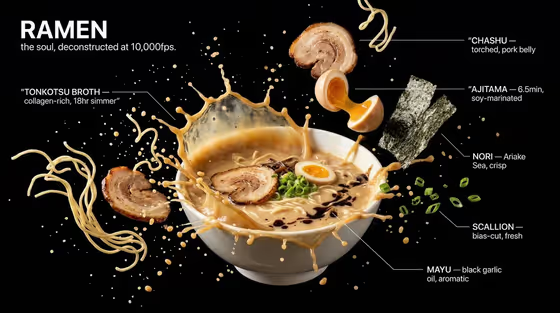
This template builds a high-speed food poster in a 3:4 frame. Your dish sits intact at the center while its own broth, sauce, or glaze erupts outward in a frozen splash, with a bold title, a tagline, and thin-line labels pointing at floating ingredients.
It suits home cooks, restaurant owners, food bloggers, and anyone who wants a menu graphic, social post, or print-style poster with a scientific motion-photography look. The cover example shows a ramen bowl on a dark backdrop with callouts for chashu, ajitama, nori, scallion, and mayu.
What works best as input
- For Hero dish, you can either type a short description (like "a glazed ramen bowl") or upload a reference photo of the dish. A clear, well-lit photo of the whole dish works better than a cropped or cluttered one.
- If you describe the dish instead, name the dish and its most visible parts, such as the sauce, glaze, or toppings. Those are what the splash and the floating ingredients will be built from.
- Pick a dish with a liquid element (broth, sauce, glaze, syrup). The fixed direction has that element erupting outward, so soupy, saucy, or glazed dishes suit it best.
- If you upload a photo, choose one where the dish is seen from a slightly raised front angle and nothing else crowds the plate.
How to use it
- Open the Liquid Explosion Food Poster template in Phosphene.
- Fill in Hero dish by typing a description or adding a reference photo, then choose a Poster background color from the options.
- Type your Dish name for the bold title, write your Ingredient callouts in the style "INGREDIENT, short note", and add a short Poster tagline.
- Generate the image, then check that the title, callouts, and tagline read correctly and the dish looks intact at the center. Adjust the fields and generate again if needed.
Tips for a better result
- Write each ingredient callout as a single uppercase word plus a few words of description, like the examples "CITRUS, sharp lift" or "GLAZE, savory shine". Short labels fit the thin-line annotation style best.
- Keep the Dish name short and punchy (the examples like FIRE BROTH or THE CRAVE are only a few words). Long titles can crowd the layout.
- Try a backdrop that contrasts with the dish: a warm creamy dish pops on a dark or deep cobalt background, while a dark sauce stands out on sunny yellow or fresh mint.
- Reuse the same dish with different taglines and background colors to produce a small series of matching posters.
Common mistakes
- Listing too many callouts or writing long sentences in Ingredient callouts. The labels are meant to be thin, clean annotations, so keep them brief and tied to ingredients that are actually in the dish.
- Describing the dish too vaguely, such as just "food". Without a clear dish and visible ingredients, the splash and floating pieces have less to work with.
- Choosing a background that blends into the dish color, which makes the splash and callout lines harder to see.
FAQ
Do I have to upload a photo?
No. Hero dish accepts either a typed description or a reference photo. The other fields are text or a color choice.
Can I choose any background color?
Poster background is a selection field, so pick from the offered options such as pure crimson, sunny yellow, deep cobalt, or fresh mint. It is meant to be a single clean backdrop.
What shape is the poster?
The output is a single image in a 3:4 aspect ratio, which suits a vertical poster or story-style post.
Can I change the look of the callout lines?
The template fixes the style as thin lines with clean uppercase labels. You control the wording through Ingredient callouts, not the line design.