The Answer Takes Minutes. The Check Takes Two Days.
Amateur decipherers have announced hundreds of AI-assisted readings of historical ciphers since September. Two researchers in the field counted the bill for checking those claims, and it runs to years of work. The same arithmetic sets the ceiling on every image and clip you ship.
AI-assisted draft. Reviewed and edited by the Phosphene team before publication.
On this page
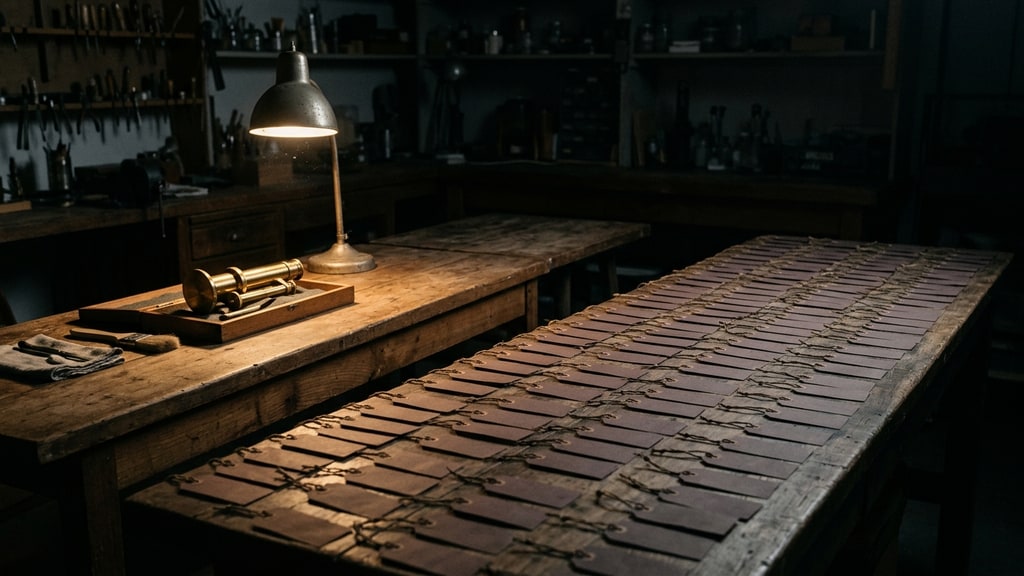
Le Monde put a number on the wave first: more than five hundred announcements of AI-deciphered historical documents since mid-September, on manuscripts encrypted between the fifteenth and twentieth centuries, some written by figures like the future Henri IV and Napoleon III, one addressed to Francis Walsingham. Cécile Pierrot, a cryptographer at Inria in Nancy, and the historian Camille Desenclos counted more conservatively and still landed on 200 to 300 decipherments claimed in a few weeks.
Then they did the accounting nobody else had done. Checking one claimed decipherment, properly, takes about two working days: symbol by symbol across the whole transcription, then cross-referencing the reading against archival, linguistic and historical records. Multiply 200 to 300 claims by two days and you get 400 to 600 working days, or two to three person-years, expected from a handful of specialists who already have jobs.
That is the whole story in one sum. Producing a plausible reading now costs minutes and a subscription. Killing a wrong one still costs days of expert attention. Any field that runs a generative model has just inherited that gap, usually without noticing.
What actually survived scrutiny
The reassuring part is that the wave is not a hoax. Tokenstrom checked ten of the most-shared cases against four fixed questions: is the solution reproducible, is the material published, did an independent expert confirm it, and was the content already known. Five came out solid.
The cleanest is Carter Church's reading of a letter to General Marmont from 1809. He published the transcription, the 155-symbol key, and scripts that regenerate the plaintext offline. Satoshi Tomokiyo checked it and marked the Cryptiana entry solved. Two things temper the celebration: a previously known partial table by Daniel Tant already supplied 33 symbol values, covering roughly a third of the letter, and the letter's troop list matches an order printed in Napoleon's correspondence since 1865. What was genuinely new fits in about half a sentence.
The two Enigma messages are similar. Frode Weierud, who keeps the Crypto Cellar archive, wrote that the model worked the 1941 message MVUEH "completely independently", picked the message itself, spotted its relationship to an already-broken sister message, and wrote its own Enigma simulator and Bombe search in Python and C++. For the second message, a human supplied the analysis software and the direction, and the key search itself took 13 minutes 28 seconds on an M2. Of roughly a thousand Enigma messages in that collection, seven remain unbroken. That is real progress, and it came with archives that could confirm it. Weierud's point about the first message is the interesting one: the model chose its own target, which is the part of research that is usually a person's job.
The cases that fall apart
The failures are more instructive, because each one is a failure of a specific check.
Urquhart's Cyphral Distich, announced on 31 August as solved in 44 minutes, is the most disputed case in the set, and the dispute appears to turn on which copy of the book you read. Reticuli's replication tested the British Library's 1653 copy: it ends with the Proquiritations, a printer's ornament, an epigraph and an errata list, with no numeric cryptogram anywhere. Ten of the 64 positions are hard-infeasible there, because no word in the target section begins with the required letter under any indexing convention, and their grid of 65 conventions topped out at 8 of 64 matches, which is chance. Against that, a reader in Bruce Schneier's comment thread reported that the method does reproduce against the 1834 edition, and that a 1653 copy held in Edinburgh contains the distich. The announcing lab never published its internal files, and Schneier wrote that he was not sure either way. Two people can be right here: the cipher may sit in one copy of a printing and be missing from another, which is the kind of provenance question the verification bill exists to pay for.
A 1560 memorandum fails earlier in the chain. Pierrot and Desenclos found the published transcription contained errors that were not flagged, and that parts of the plaintext in the announced version were missing or altered relative to the raw output, with no note saying so. A decipherment cannot be better than the transcription underneath it.
And the Zodiac Z13 case cannot be settled at all. Thirteen characters is below the length at which a homophonic substitution cipher has a unique solution, so dozens of readings fit equally well. Alex Baber's "Marvin Merrill" answer came from filtering 71 million names against the cipher, and the former NSA cryptographer who looked at it confirmed the method was internally consistent, not that the name was right.
Generation is metered by checking, not by compute
Here is the part I keep coming back to. The pattern in this wave is minutes of generation against days of verification, and the cleanest case bends it in the interesting direction rather than breaking it: Carter Church reports about six hours of compute plus his own evenings for the Marmont letter, measured against two working days for someone else to check it. When the check costs more than the making, the throughput of the whole system is set by the checking side. Adding more generation capacity does not add more knowledge. It adds more queue.
Pierrot and Desenclos describe the effect plainly: the ease of getting plausible answers produces a volume of results that is humanly impossible to validate, and the careful examination that rigor requires then pulls researchers away from the work that would actually establish a reliable history of cryptography. The tool sold as a time-saver ends up consuming the days it promised to free.
That is not an argument against using the tool. Inria runs its own model for this, a small free transcription system built for one task, used under control, with every output checked and reproducible elsewhere. The difference is scope. A general chat model is optimized to produce probable text for any question. A transcription model is optimized to produce one narrow artifact that somebody else can re-run.
The three things that made a claim checkable
Strip the cryptography away and the surviving cases share a shape. Each one let someone who did not make it decide whether it was true.
- The raw material was published, not just a narrative about it. Church's transcription and key, not a story about them. The 1560 memorandum is the near miss: a transcription was published, but its errors went unmarked and the announced plaintext had drifted from the raw output, so that chain failed one step earlier.
- Another party could re-run the work offline. Scripts, keys, seeds, inputs. A reading that only exists inside one vendor's chat session is a demo.
- The check was done by someone with standing, independent of the producer. In the Enigma case, that standing belonged to the archive that holds the message, and the verification repository made the distinction sharply: the acceptance that matters is the corpus custodian's, not the solver's.
Two of those three are cheap. The third is where the two working days go.
What this costs a creative pipeline
Anyone shipping generated images or clips makes the same trade several times a day and rarely books it. Generation runs in seconds. The decision that the output is the shot you wanted takes a review pass: you look at hands, at text, at whether the light matches the previous frame, at whether the subject is still the same person. That pass is the real constraint on how much work leaves the studio, and it does not get faster when the model does.
Three habits follow, and none of them are about prompting.
Keep the receipt with the keeper. Prompt, seed, model build, resolution, reference images, sampler settings. Not for the client, for the later question of why this one worked and the next twelve did not. A rendered file with no record of how it was made is a claim you cannot check, including by yourself next month.
Fix the rubric before the batch, not after. The cipher-researchers' four questions are a rubric. Yours can be duller: subject identity holds, no invented lettering, light direction consistent with the plate, crop survives the 4:5 version. Written down, eight of ten rejects are obvious in five seconds. Improvised, the same eight take twenty minutes of scrolling.
Separate "the model got it wrong" from "I never specified it". The second one is the common case and it is your fix to make, not the model's.
That split between what a machine can settle and what still needs a person is the same one that showed up when agents started formally verifying code faster than anyone could review the specification, which we wrote about here.
The last lesson here is less comfortable. The most dangerous output in this wave was not the obviously broken one. It was the reading that came with a confident narrative attached, where the announced plaintext had quietly drifted from the raw output and nobody said so. Plausible plus explained is the combination that gets past a tired reviewer.
The wave will settle. Some of those decipherments are real, a few are new, and the archives will absorb them over the next year, slowly. What will not settle is the gap. Whatever your field, the model now produces candidates faster than anyone can judge them, and the judgment is the product.
Sources
- Le Monde (French original): Quand l’IA prétend déchiffrer des documents historiques qui ont résisté aux cryptographes
- The Conversation: Des centaines de textes historiques « déchiffrés » par l’IA, que penser de ces résultats ?
- Tokenstrom: we fact-checked ten celebrated AI cipher cases
- Carter Church: Breaking the Marmont Cipher, 1809
- Reticuli Labs: replication findings on the Cyphral Distich claim