Making pictures is the seventh reason German teenagers open an AI tool
The JIM study 2026 asked 1,200 German speakers aged 12 to 19 what they use AI for. Making images came seventh of nine, 47 percent of regular Instagram users describe their use as passive, and the youngest group reads the AI answer without checking the sources. For anyone selling generated pictures, the customer is more often scrolling than making.
AI-assisted draft. Reviewed and edited by the Phosphene team before publication.
On this page
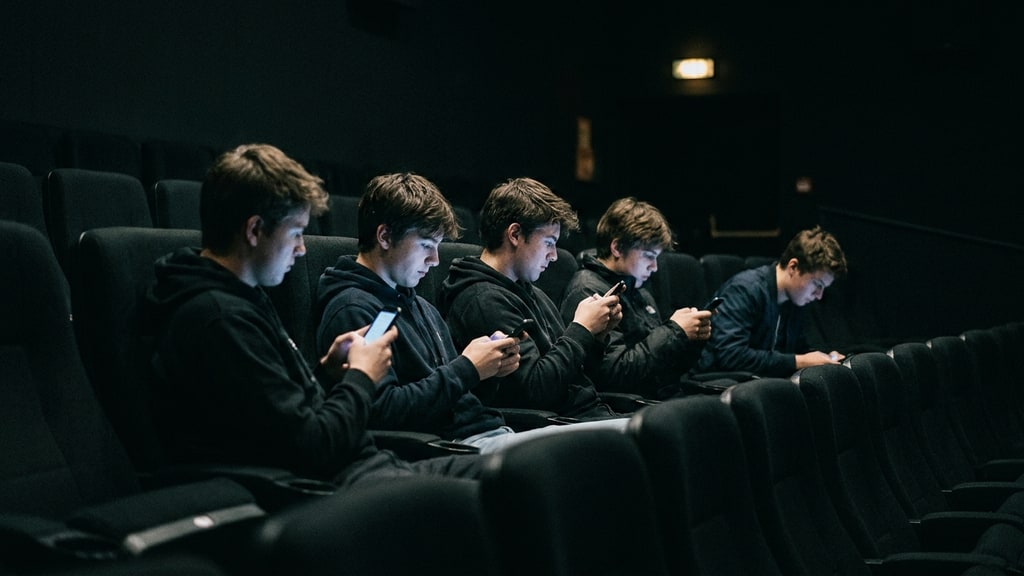
The JIM study is a German institution: an annual survey of how 12- to 19-year-olds use media, run by the Medienpädagogischer Forschungsverbund Südwest with public broadcasting money, collecting representative data since 1998. The 2026 edition was presented last Friday at the GMK forum and published this week, and heise covered it under a section heading that reads "watching instead of posting". The full PDF is public, which means the numbers can be read instead of summarized, and the numbers are more useful than the headline.
The survey took 1,200 German-speaking young people between 27 May and 6 July 2026, half by phone and half online, weighted by age, gender, and federal state. What it shows is a generation that describes its social media use as mostly passive while its use of AI assistants keeps climbing. Both facts matter if you make pictures for a living.
Image generation sits seventh out of nine reasons
Sixty-three percent of those surveyed use an AI application regularly, meaning several times a week or more. Ninety-two percent have touched one at least rarely, and roughly three in ten use AI daily. Above 14 years old, regular use reaches about seventy percent; among 12- and 13-year-olds it is 45 percent.
Among the young people who do use AI, the reasons rank like this:
- Looking something up: 76 percent
- Homework and studying: 75 percent
- Instructions for how to do something: 59 percent
- School and lessons: 47 percent
- Fun: 42 percent
- Planning something: 30 percent
- Making images: 28 percent
- Health questions: 26 percent
- Talking through worries: 15 percent
Making pictures is a real use case and a growing one, up from 26 percent last year. It is also behind "fun", behind "planning", and far behind the two things the tool is actually being adopted for: finding information and getting homework done. The gender split is small and consistent with everything else in the report: 30 percent of boys and 25 percent of girls use AI to generate images, while boys use it for fun at 45 percent against 39.
If the two percentages compose, roughly one in four of all 12- to 19-year-olds in the sample has used AI to make a picture: 28 percent of the 92 percent who have touched an AI tool at least rarely. That is a decent addressable base. It is not a generation of image makers, and the ranking is a warning against building a product that assumes the desire to make pictures is the primary reason anyone opens a chat box.
The tool that grew is the one nobody chose
ChatGPT remains the default at 85 percent ever used, but it has stopped growing: 49 percent regular use against 50 percent a year earlier. Google Gemini is the one that moved, from 32 to 55 percent at-least-occasional use and from 12 to 27 percent regular, a 23-point jump. Meta AI fell four points to 28. Copilot held at 19. Snapchat's My AI dropped to 15. Perplexity, asked for the first time, sits at 11 percent.
The pattern is that general assistants bundled into things people already own are absorbing the casual request. Gemini's growth looks like distribution, not enthusiasm, and distribution is what a specialist creative tool never has. A standalone image generator is competing for a slice of that 28 percent, against a tool that is already open in the same app the request starts in.
That is not an argument against specialist tools. It is an argument about which job you are being hired for. "Make me a picture" as a passing whim belongs to whatever is one tap away. "Make this specific picture, this way, consistently, twelve times" is a different job, and the study gives no evidence anyone expects a chatbot to do it. The craft segment is smaller than the casual segment and it is the one that pays.
The mostly-active share fell by thirty points
Eighty percent of the young people surveyed use social media regularly, so reach has not gone anywhere. The share who describe their own use as mostly active has fallen. The study asked regular users of Instagram, Snapchat, and TikTok whether they use the platform actively, meaning posting, commenting, sharing, or passively, meaning watching.
Instagram in 2026: 28 percent active, 25 percent both, 47 percent passive. In 2016, the last time the question was asked, it was 58 percent active, 7 percent both, 35 percent passive. Active use is down 30 points and the mixed group is 18 points larger, though the two surveys are separate cross-sections, so that is a comparison of two populations rather than a record of anyone changing behaviour. Snapchat dropped from 76 percent active to 34, a 42-point fall. TikTok, which did not exist in the 2016 survey, runs at 24 percent active.
The study suggests one thing holding Snapchat's active number up is a game mechanic rather than a creative urge: 40 percent of all respondents keep a "flame" streak alive by messaging daily.
Read that against the AI numbers and a shape appears. The same cohort describes its social media use as mostly passive, and image making ranks seventh of nine among the reasons it opens an AI tool. The two surveys measure different things, so the comparison is a mood rather than a measurement: a passive audience on one side, a mostly lookup-shaped use of AI on the other.
For anyone publishing AI-generated visuals, the implication is about which side of the screen to optimize. On Instagram 47 percent of regular users describe their own use as passive, 28 percent as mostly active and 25 percent as a mix, so a feed that is pleasant to scroll is serving the largest group. Whether a community feed can ask those users for contributions is a separate question, and the study does not answer it: it reports self-described categories, not who posts, and it does not follow individuals between surveys.
The youngest readers skip the sources
There is a detail in the report worth more attention than it got. Asked what they do when a search engine returns an AI answer, 30 percent of 12- and 13-year-olds say they read only the AI answer. Among 18- and 19-year-olds that drops to 17 percent. Reading the answer and then using the other results as well rises from 43 percent to 59 percent across the same range.
That is a trust gradient running the wrong way with age, and it has a direct consequence for educational work. If your audience is young, the version of your material that travels is the answer-shaped one, without the link, without the caveat, without the four paragraphs explaining what the measurement did not cover. On the receiving end, the source and the claim arrive as the same object.
The practical response is not to fight it. It is to make the claim survive compression: state the number, state its basis, and keep the caveat inside the sentence rather than in a footnote. A caveat in a footnote does not travel. A caveat in the sentence does.
What I would change after reading this
Three things, in order of how much they cost to get wrong.
Measure by cohort, not by average. The report's aggregate hides a 45 percent regular-AI-use rate at 12 and 13 against roughly 70 percent above 14, and a fun-use rate of 56 percent in the youngest group against 35 to 41 for everyone older. A single "our users are young people" persona is a blend of two different behaviours.
Design for one result, not a workspace. Twenty-eight percent of AI users making images, in a context where the same people mostly use AI to get an answer, suggests the winning shape is a thing that returns one usable picture quickly. Depth is for the segment that comes back, and it should be reachable without being the front door.
Do not stake the product on contribution. If 47 percent of regular Instagram users describe their own use as mostly passive and another 25 percent as a mix, the upload loop is a feature for enthusiasts. A catalog that can be browsed and used without asking the visitor to make anything is closer to how this audience describes itself.
What the numbers do not say
The sample is German-speaking, 12 to 19, and self-reported. "Regular" means several times a week, which is a lower bar than it sounds. The motive percentages are calculated among AI users only, not across all respondents, so they describe the shape of demand inside the group that already shows up. The jump from 26 to 28 percent on image making is two points, which is inside the noise for a sample this size; the ranking is the finding, not the movement. And a single year cannot tell you whether the passive turn is a plateau or a trend that keeps going.
What it can tell you is where the people are: mostly watching on social platforms, and asking AI for answers more often than for pictures. That is the room any AI image product is selling into.
For the platform side of the same question, what Steam's disclosure rules reveal about AI images covers how storefronts are already sorting generated work, and the attention cost of AI-heavy feeds is the reader-side version of the passivity measured here.