CD Projekt Changed One Axis of a Voice and Left the Acting Alone
For The Witcher 3 expansion Songs of the Past, Geralt's Polish voice actor records every new line himself while a model trained on his 2014 archive pulls the timbre back toward the original. The method is narrower than the debate around it, and that narrowness is what makes it work: a corpus, one axis, a cleanup budget and a written stopping point.
AI-assisted draft. Reviewed and edited by the Phosphene team before publication.
On this page
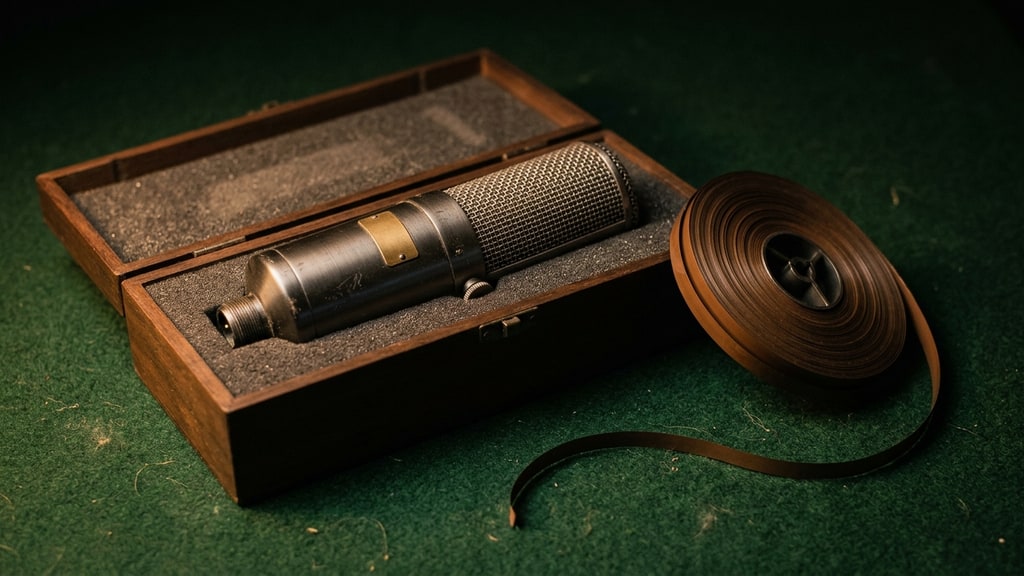
The Witcher 3 came out in 2015 and has sold more than 65 million copies. In 2027 it gets a third paid expansion, Songs of the Past, for PC, PS5, Xbox Series X|S and Switch 2. The story sits around the same point in the timeline as the base game, which means new dialogue for Geralt will play a few seconds after dialogue recorded eleven years ago, sometimes in the same map.
That is a continuity problem before it is an AI problem. And it got worse in 2019, when Jacek Rozenek, who has voiced Geralt in Polish since the series began, had a stroke. For months he could not speak. When his voice came back it was lower and gruffer than the one on the 2014 recordings.
CD Projekt had a choice that every studio with a long-running cast eventually faces: recast, or keep the actor and accept an audible seam. They picked a third option, and the way they built it is the useful part.
What they actually did
They invited Rozenek to the studio to hear how his voice sounds now, and confirmed the mismatch was real. Then, with his agreement, they called Respeecher, the Ukrainian voice-conversion company they had used for Cyberpunk 2077's Phantom Liberty.
The workflow is not what the headlines suggest. Rozenek performs every new line himself. A model trained on roughly 10,000 lines he recorded in 2014 for the original game then shifts the timbre of those new takes toward the voice he had then. It is not asked to invent a performance, only to move the sound of a real one.
His own read on it, speaking to Game File's Stephen Totilo, is that he feels comfortable with the acting side. The dynamics and the performance are his. Localisation producer Mikołaj Szwed called it one of the cases where you can use AI ethically, with the actor's consent, to do something good.
Three conditions, and all three are load bearing
It is tempting to file this under "AI voice, but nice". The more useful move is to name the conditions that make it different from the thing dubbing actors are rightly worried about.
The first is that the performance is new and human. Nobody generated dialogue and nobody cloned a delivery. A living performer did the work, was paid for it, and can say no.
The second is that the model's target is the same performer's own archive. The reference is not a generic Geralt sound, it is Rozenek in 2014 saying these words in this world. Restoration means returning someone to themselves.
The third is that the contradiction is stated out loud. Szwed told Game File that AI in dubbing is a serious concern for people who work with voice actors worldwide, and that this is a special case rather than a template. A studio willing to say that in the same breath as the announcement is doing the argument honestly.
Remove any one of those and you have a different object. Remove the first and you have synthesis wearing an actor's identity. Remove the second and you have approximation, which is what most cheap voice tools sell. Remove the third and you have a precedent that will be cited by the next studio that wants to skip the recording session.
The corpus is the model
Respeecher had about 10,000 lines from 2014 to learn from, all the same character, the same performer, the same production era. That is why the result can sit next to the original without a seam. Continuity work is mostly an archive problem.
For anyone doing this at a smaller scale, that reframes the preparation. The question is not which model, it is what you own. Forty minutes of phone-mic scratch tracks is not a corpus, it is a suggestion. A performer's clean, consistently recorded body of work is the asset, and if you have been recording voice for years without keeping the raw takes, you have been throwing that asset away.
Worth noting what that asset actually is. It is a person's body of work, and using it is a permission question before it is a file-format question. CD Projekt had the actor in the room. In the Phantom Liberty case the actor, Miłogost Reczek, had died in 2021, and the family's agreement is what made the work possible.
Fix one axis, prove you fixed one axis
The technical discipline here is a single idea: separate timbre from performance, then touch only the first.
Timbre is what a voice sounds like. Performance is timing, emphasis, breath, the choice to hold a pause too long. A conversion model that also "improves" the acting has done the wrong job, even if the output sounds more polished, because the acting was the only thing the actor was still fully in control of.
There is a cheap first check for this, and it does not need a lab. Record a deliberately odd read. Hold a pause past comfort, put the emphasis on the wrong word, let a line go flat on purpose. Run it through the tool. If the oddity survives, that is a sign the model kept this passage's performance, not proof that it kept the rest: one passage can survive while the emphasis drifts somewhere else in the take. Compare several representative takes before you believe it. If the oddity gets smoothed away, it is rewriting the performance and you have lost the actor's decisions along with the mistakes.
Image people will recognise the same principle from a different angle. An edit that lands as its own layer with a slider is a tool. An edit that returns a new picture with no history is a replacement. The axis you can dial is the axis you still control.
The bill arrives as cleanup
The AI step is not the deliverable. Several dozen hours went into training the models, aligning with CD Projekt's teams, and correcting artefacts the conversion introduced. That is for an expansion's worth of lines, on top of the recording sessions.
So the schedule shape is: record everything, convert, then spend the long tail fixing. If you plan a project around generation time you will be wrong by a factor that ruins the milestone. Plan around audition and repair, with the actor available for pickups, because the fixes are often performance notes rather than model notes.
Judge it in context, not soloed
The bar is not "does this line sound good on its own". The bar is that a player walking through a village hears a 2014 line, then a 2026 line, and does not notice a change.
That is a harder test than it sounds, and it has a right way to run. Check the pair in sequence, at game-mix level, on a laptop speaker and a headset, not on studio monitors with one clip at a time. Most seams that survive a soloed A/B disappear in a mix, and most seams that fail a mix pass a soloed A/B perfectly. Test the thing the player experiences.
A stopping rule, stated early
The detail I keep coming back to is that CD Projekt does not plan to retouch Rozenek's voice again. If Geralt returns in a game set later in the timeline, say The Witcher 4 in 2028, then the lower, rougher voice is simply the character getting older.
That is a boundary stated before it was needed, which is the only time a boundary is worth anything. The technology can now do something repeatedly, cheaply and convincingly. Deciding in advance where you will stop using it is cheaper than deciding under pressure later, and it turns a slippery permission into a stated editorial position.
The uncomfortable version of this story
The reason this reads as ethical rather than exploitative is not the software. It is that the studio wanted the actor, not just the voice. They paid for new sessions, they accepted the extra months, and they let him describe the result in his own words.
Run the same tools with a cost motive and the shape inverts. You keep the voice and drop the person, and every sentence above about consent and craft becomes decoration on a spreadsheet. Szwed's acknowledgement that the industry's fear is legitimate is the most honest line in the coverage, because it names the version of this workflow that will be used against the people in it.
So the test for anyone copying this is not technical. Would you still do it if the actor cost more than the model? If the answer is no, you are not restoring a performance. You are replacing one, and it is worth being honest about which of those you are shipping.
Sources
- Game File: For The Witcher 3's 2027 expansion, CD Projekt is pairing Geralt of Rivia's original Polish voice actor with AI
- CD Projekt mobilise l'IA pour l'extension de The Witcher 3 (French original, Numerama)
- heise online: The Witcher 3 - KI bearbeitet Geralts polnische Stimme nach Schlaganfall (German)