AI field notes
Reporting and context on AI tools, creative work, and the limits behind the headlines.
Explore the topic
99 articles · Page 6 of 9
Amazon's AI Dubbing Redraws the Actor's Lips, Frame by Frame
Prime Video is testing a tool that rewrites mouth movement to match a translated voice, starting with the German series Maxton Hall. The lip sync is the easy claim. The open question is who agreed to the voice, and why an almost-right face can read worse than an obvious mismatch.

Beyond the Single Clip: What a Hands-On WonderClip Lab Says About AI Video Production
About 50 Japanese video and ad practitioners will spend 45 minutes making a real asset in WonderClip, Alibaba Cloud AI video platform, in a Shibuya lab on September 30. The event is small, but the question behind it is general: generation is no longer the bottleneck, the production flow is. Field notes on pipeline platforms, Wan3.0, and a rights clause worth copying.

Chain of Thought Explained: How AI Learned to Reason, and Why Its Reasoning Is Getting Harder to Watch
Chain-of-thought made AI dramatically better at multi-step problems by forcing models to reason step by step. It also created a new monitoring problem: the more capable the reasoning, the harder it is to see. A French explainer and an OpenAI chief scientist both walk through the same tension.

Illustrator AI Assistant: Chatting Your Way to a Vector Manga Page
Adobe put a chat-based AI assistant in the Illustrator beta, and it can build a structured vector comic or an infographic from a single conversation. The prompt that makes the output editable is a layer contract, not a style description. A Japanese designer tested the beta on a one-page manga and a dense data poster, and the parts worth stealing are the structure rules, the numeric checks, and the honest verdict on speed.

Google Lyria 3.5 Review: Free Music Generation Inside the App You Already Use
Google brought the Lyria 3.5 music model to the Gemini app, AI Studio, and the API. In the Gemini app it works with no separate music-service signup; the API is paid tier only, at $0.08 per song. A Japanese creator tested genre prompts, image-to-music, and vocal tracks, and found the real story is the distribution, not the model. Here is what that means for creators who need one incidental track.

When Motion Stops Being Special: What Clients Pay For After Video Commoditizes
A Japanese AI film essay argues the real change is not amateurs making commercial-grade anime, but private animation seeping into everyday places that never used motion before. That shift erodes the default budget justification for video, and what clients pay professionals for changes with it.

One Graph Beats a Swarm of Agents
Anthropic had Claude agents formalize Fermat's Last Theorem in Lean. The first attempts collapsed into duplicated work and lost track of the project. The fix was not a better model — it was a shared dependency graph. Here is what that teaches about running many agents on one creative pipeline.

Why AI Posters Make People Angry
French streets filled up with AI-generated flyers this summer and the backlash went viral: one drawing pulled 1.2 million views in three days. A look at what the anger is actually about, and how to make cheap visuals that do not read as slop.

Disposable Software: The Creators Who Build a Tool, Use It Once, and Throw It Away
When coding agents get fast enough, the economics of tooling flip. A Japanese AI manga creator now writes purpose-built utilities for single production tasks — a clip search engine for one character bank, intended for one project, then discarded. Why throwaway tools beat permanent apps for creative work, and where the limits are.

Adversarial Patterns for Designers: When Fabric Defeats a Vision Model
Berlin is rolling out AI behavior-scanning cameras, and a German artist is selling a shirt whose pattern makes YOLO object detectors stop seeing the wearer. The computer vision principles behind adversarial patterns matter to anyone who makes images with AI, because detectors and generators can both reflect learned visual patterns, even though their objectives and failure modes differ.

The Creative Studio Model Churn Playbook: Split What the Model Gives You From What You Own
A Japanese AI filmmaker argues that Nano Banana and Seedance 2.0 reset the market twice in six months, so technical advantages now expire faster than production cycles. His answer for studios: separate model-dependent assets from model-independent ones, and plan around model release dates instead of fiscal quarters.
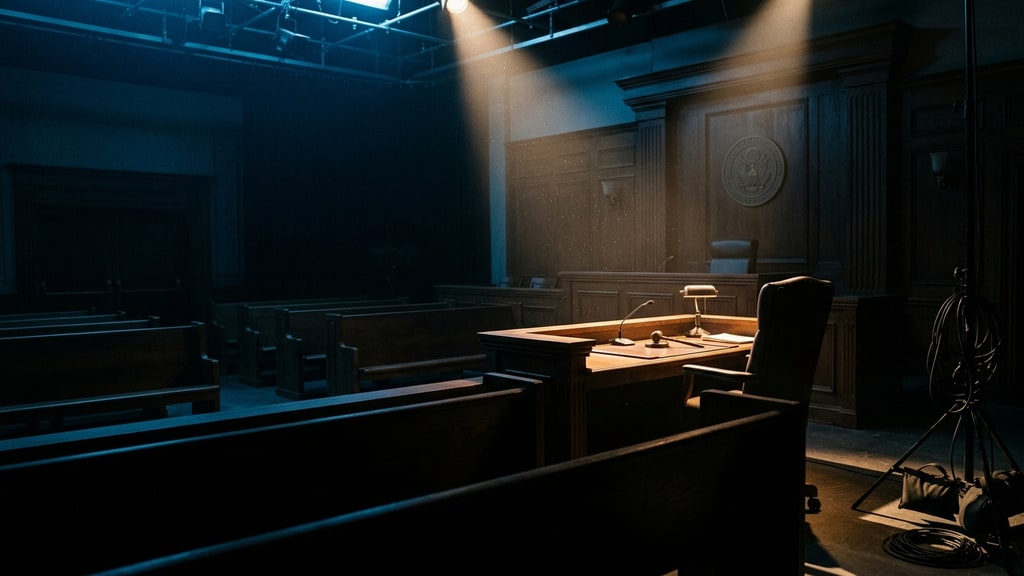
A TV Network Just Aired Five Episodes Rewritten by AI
RTL used image editing, voice synthesis, and lip-sync adjustment to change characters, plot turns, and verdicts in five existing episodes of a daily court show. Not a tech demo: rights cleared, legally reviewed, aired in a regular slot. The quiet part is what the format choice reveals about where AI editing pays first.