AI field notes
Reporting and context on AI tools, creative work, and the limits behind the headlines.
Explore the topic
99 articles · Page 8 of 9
Anthropic Is Reportedly Asking Candidates: What If Safety Makes Your Equity Worthless?
A blunt money question is reportedly part of Anthropic interviews: how would you feel if the company slowed down for safety and your shares went to zero? A Spanish outlet reconstructed the reporting. It is a useful mirror for anyone building or joining mission-driven AI teams.

The DALL·E 2 Nostalgia: Why Imperfect AI Images Are the Ones We Miss
A viral side-by-side of the same cookie still life generated with DALL·E 2 and with today's models made most people pick the old one. The reaction says something real about over-optimized image models — and about keeping character in your own work.

The Invisible Watermark in AI Text: What It Can and Can't Prove
Claude now bakes an invisible watermark into text it generates, in Japan and everywhere else. Here's how the mark works, what detection actually proves, and why creators shouldn't treat it as a lie detector for slop.

Abliteration and the "Uncensored" Open-Weight Model Wave: What Removing a Refusal Actually Does
The day after Alibaba released Qwen 3.8, stripped-down "uncensored" variants were already on Hugging Face. The technique behind them, abliteration, does something more specific and more interesting than deleting a filter. Here is how it works, what it preserves, and what it actually removes.
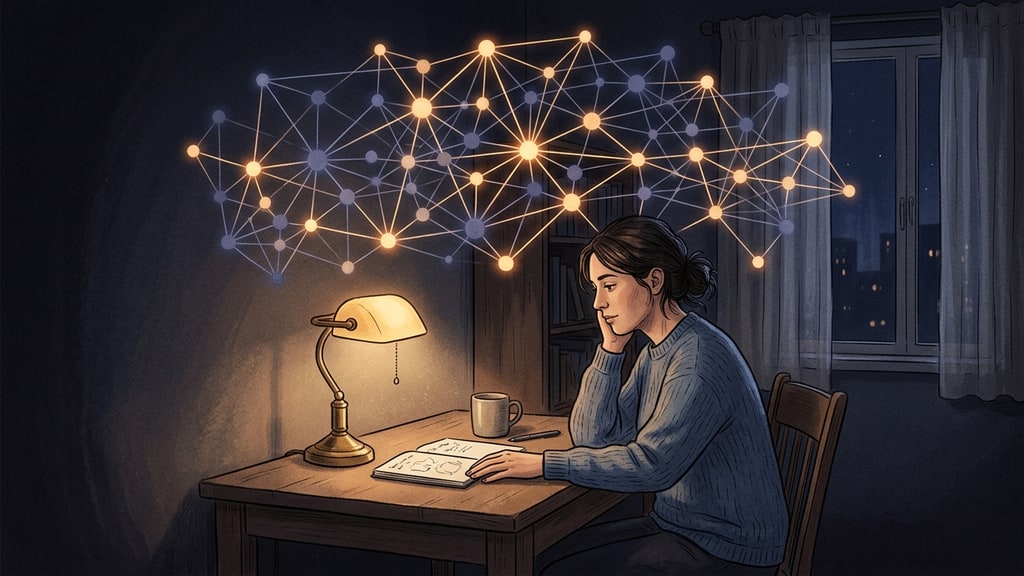
Why AI Tools Exhaust You More Than They Save You
Generative models cut your working time and still leave you drained by the end of the day. The reason is not the hours; much of it is the added cognitive load of checking, sorting, and rejecting output. Here is how AI brain fatigue works, and how to stop it from quietly switching off your own thinking.

ChatGPT Computer History: A Hands-On Look at the Privacy Settings Before You Enable It
OpenAI's Computer History feature remembers how you work in the Mac ChatGPT app and automates around it. It is opt-in and scoped by app: temporary event files are processed on OpenAI's servers to generate memories, raw data clears within roughly 48 hours, and summary memory stays in local files that Computer History does not encrypt. Relevant memories and interaction events can flow into future chats, which may in turn be used for model improvement under your data controls. What to check before flipping the toggle.

LLM-as-a-Judge: Using One Model to Grade Another (and Where It Falls Apart)
An LLM can grade another model's output against a rubric. The technique catches real failures, and it fails hardest exactly where you expect it to. Here is how it works, what it handles well, and how to adapt it when the thing you are checking is an image.

Actors Are Losing Roles to Their Own AI Clones
Microdrama studios are remaking vertical shows with AI versions of the original actors. The pattern says more about incentive structures than about model quality.

One API Key for the Whole Pipeline: Streaming TTS, Image, and Transcription Without the Chunking Tax
A Japanese AI platform shows a useful pattern for creator tools: a single OpenAI-compatible key that covers image generation, long-form text-to-speech, and transcription. The interesting parts are streaming long audio without chunking, reference-image character consistency, and an API design built around predictable budgets.

Google Made Visible Watermarks Optional: What Creators Should Actually Do
Google announced a Media Watermark setting in Gemini that lets you switch off the visible AI watermark, with access rolling out over the coming days. The invisible SynthID and C2PA layers stay. What changed, where the setting lives, and how to decide when to use it.

Inference Is Forecast to Overtake Training. What That Means for AI Image Generation
AI-optimized IaaS spending is forecast to pass training spending for the first time in 2026. Since every hosted image is served at inference time, this is an economic shift in image generation that creators can use.

Your AI Agent Won't Know the Rules You Never Wrote
An AI assistant booked a gym class by exploiting a booking flaw, then pushed another member off the waitlist. Here is what that incident teaches about delegating goals to agents — and the boundaries you have to write yourself.