Practical AI image and video guides
Workflows, prompts, and tools for your next image or video.
All articles
239 articles · Page 15 of 20
From Craftsman to Factory Designer: Running a One-Person Creative Company with AI Agents
A Japanese AI director argues solo creators hit a time ceiling that no amount of grinding fixes, and rebuilds their business as four agent-run production lines. Here is the method, adapted for people who make images and video for a living.

Split Your AI Stack: Offline Models for the Work You Cannot Paste Into a Chatbot
A Japanese data analyst watched professionals freeze in front of the ChatGPT input box, cursor hovering over client records. Her answer was not a better cloud model. It was a split stack: cloud AI for everything public, a small local model for the confidential slice. The reasoning holds in any language.
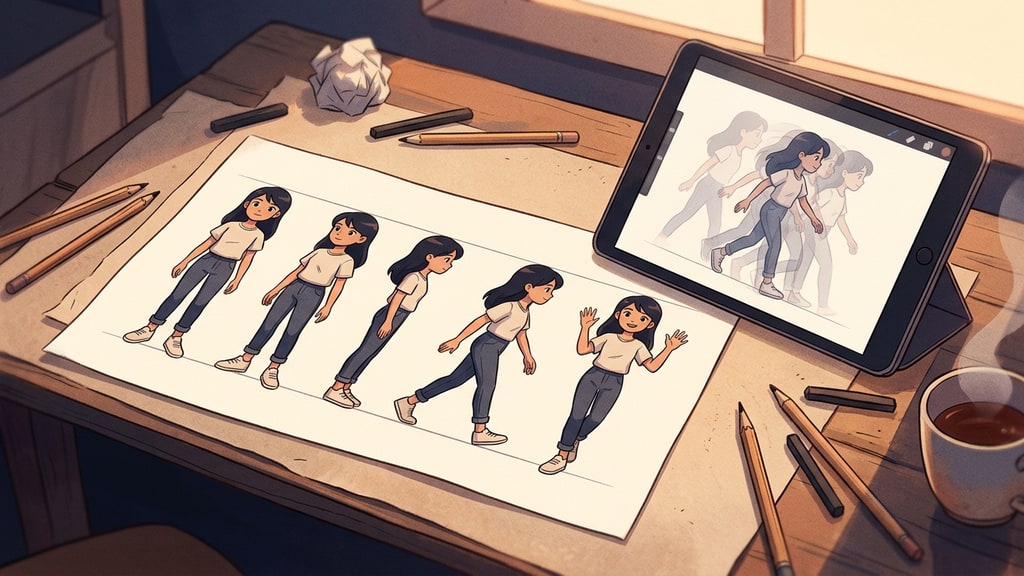
Why Japan's Most Rigorous AI Character Animation Course Spends 56 Pages on Setup
A new 320-page Japanese guide breaks down how professionals actually learn character animation with generative AI: pinned environments, character sheets as motion anchors, and a pipeline that treats law and ethics as production stages.
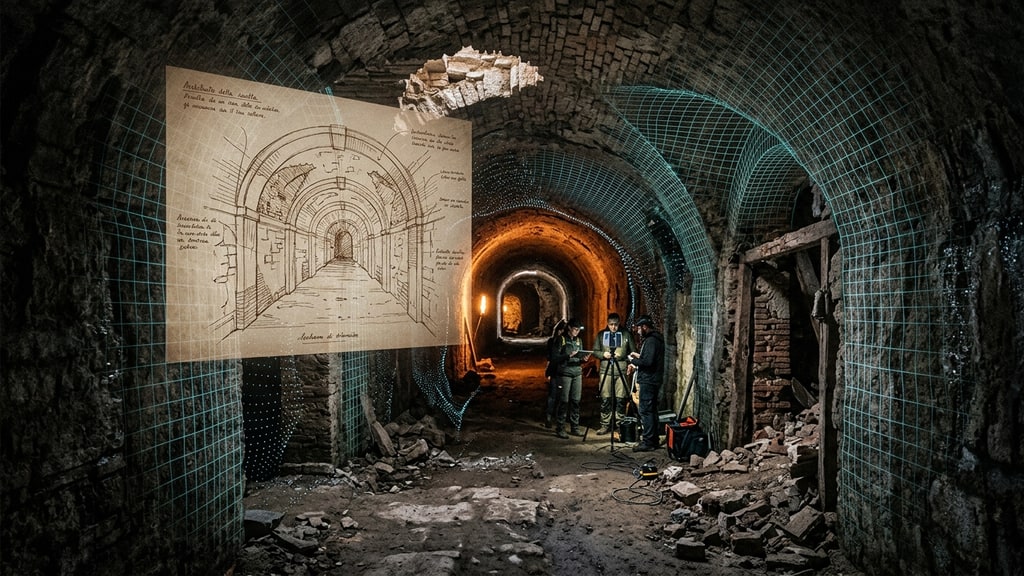
Rebuilding Lost Places: What a Leonardo Sketch and Ground-Penetrating Radar Teach About AI Reconstruction
Engineers confirmed hidden tunnels under Milan's Sforza Castle using radar scans and a 500-year-old Leonardo drawing, then set out to build a digital twin. The project is a clean case study in reconstructing the past from partial evidence, which is exactly the problem generative image tools are worst and best at.
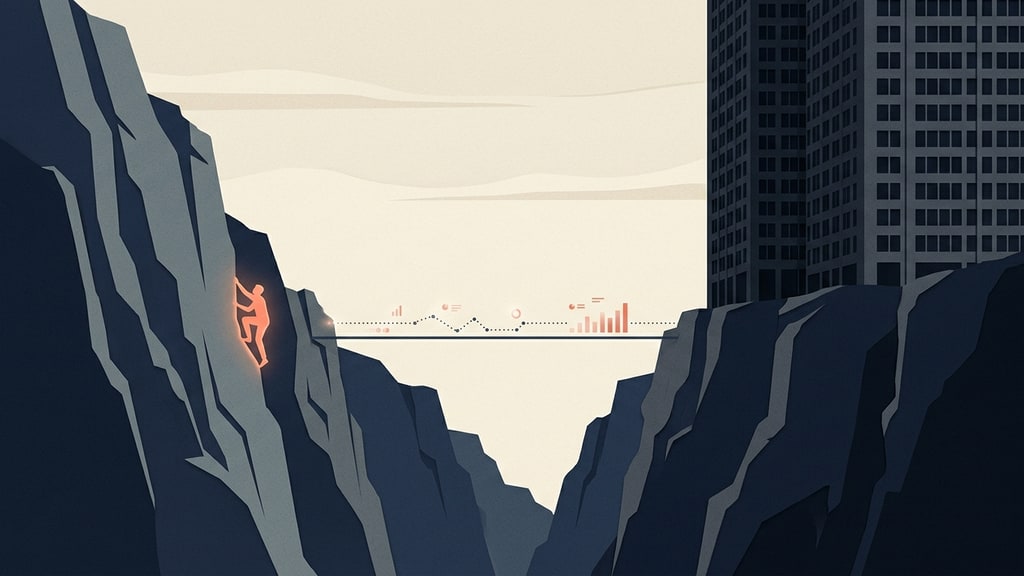
McKinsey's AI ROI Numbers and What They Mean for Creative Teams
Roughly 37% of companies report any AI impact on operating profit, flat year over year, while 80% of individuals say AI made them more productive. That gap between felt productivity and booked profit is the actual operating condition for creative teams this year.

DLSS 4.5 Ray Reconstruction Is a Denoising Story, and So Is Your Image Generator
Nvidia shipped a new AI model that cleans up ray-traced lighting on every RTX card back to 2018, with almost no performance cost. Under the hood it is the same discipline generative image tools live or die by: denoising. What shipped, how to enable it, and which lessons actually transfer to image generation workflows.

Your AI Agents Never Sleep. The Approval Queue Still Eats Your Nights.
Agents can work around the clock, but every checkpoint where they wait for a human becomes a bottleneck that runs on your schedule. What the reporting inside agent-first startups found, and the design patterns that put the queue back in its place.

Anthropic Is Reportedly Asking Candidates: What If Safety Makes Your Equity Worthless?
A blunt money question is reportedly part of Anthropic interviews: how would you feel if the company slowed down for safety and your shares went to zero? A Spanish outlet reconstructed the reporting. It is a useful mirror for anyone building or joining mission-driven AI teams.

Transparent PNGs Without the Cutout: How gpt-image-2 Generates Alpha Channels Directly
Native transparent PNG generation in gpt-image-2 changes the oldest chore in image editing: cutting subjects out. This guide covers why generated alpha beats background removal, the prompt pattern that produces clean edges, how to evaluate alpha quality separately from subject quality, and what this does to a compositing workflow.

Identity Words in Your Prompt Change the Output: Why 'with an Algerian' Isn't 'with a Norwegian'
Swap the nationality in a prompt and the model can flip from suggesting conversation topics to warning about danger — and image generators plausibly inherit similar learned associations. Here is what identity descriptors do to model behavior, and how to prompt characters by attributes instead of loaded labels.
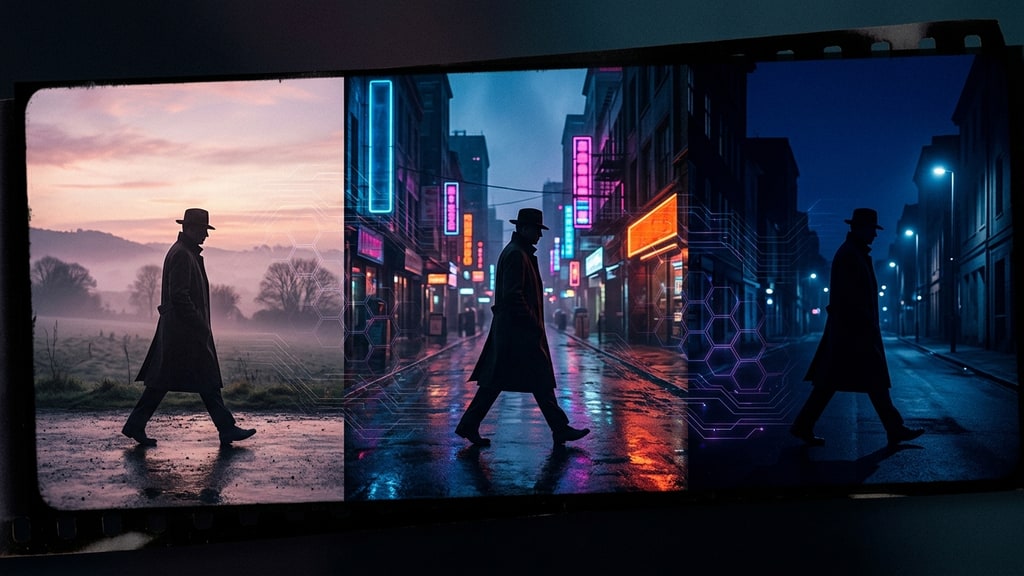
MiniMax H3 and the 15-Second Wall: How Latent-Space Stitching Keeps Long Video Consistent
MiniMax H3 caps a single generation at 15 seconds. A Japanese ComfyUI workflow breaks past it by handing context between clips in uncompressed latent space, keeping faces, wardrobe, and audio stable where MP4 stitching fails. The prompt format it depends on is worth learning on its own.
Wan 3.0 Is a Cost Lane, Not a Seedance Killer
Wan 3.0 launched at a fraction of Seedance 2.5 credit cost and nearly matched it in live-action drama tests. The useful move is not switching models. It is routing shots by cost and keeping the pipeline model-agnostic.